Guide to Mezcal Production Methods in Mexico

Guide to Mezcal Production Methods in Mexico

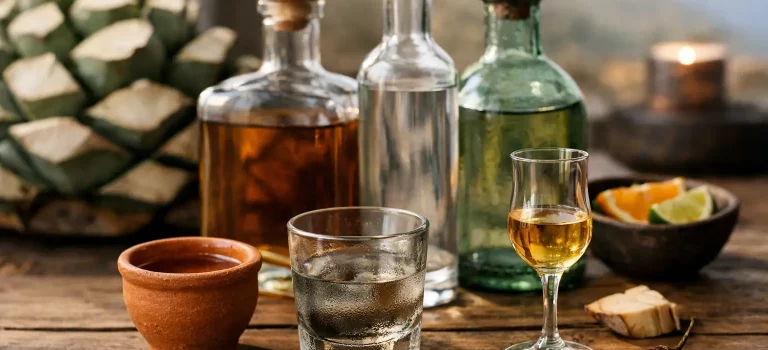
A true guide to mezcal production methods begins long before a piña reaches a roasting pit. It begins in Mexico’s dry hillsides, forests, and valleys, where agaves can take years, sometimes decades, to mature. Every bottle carries the decisions of the people who grew, harvested, cooked, fermented, and distilled it. That is why mezcal can smell like wet earth, roasted pineapple, citrus peel, wild herbs, smoke, or cacao – and why no two producers, villages, or batches are quite alike.

For the curious traveler, understanding the process turns a pour from a pleasant souvenir into a living expression of place. At Santos Destilados, this is the story we love sharing across the tasting table: not just what is in the glass, but the hands, heat, and patience that gave it character.

Guide to Mezcal Production Methods: From Agave to Glass

Mezcal is a Mexican agave spirit produced under a protected denomination of origin. While Oaxaca is its best-known home, mezcal is also made in several other authorized states, including Durango, Guerrero, Puebla, Michoacán, Guanajuato, San Luis Potosí, Tamaulipas, Zacatecas, and parts of other regions recognized under the denomination.

Unlike tequila, which must be made from blue Weber agave, mezcal may be made from dozens of agave species and varieties. Espadín is the most widely used because it is relatively abundant and cultivable. Wild or semi-wild agaves such as tobalá, tepeztate, arroqueño, and cuishe often bring more distinctive profiles, but they may require far longer to mature. A rare agave does not automatically mean a better mezcal. It does mean the producer faces different agricultural realities, and responsible sourcing matters.

Harvesting: Finding the Heart of the Agave

The harvest begins when a skilled jimador or agave farmer cuts away the long, spiked leaves. What remains is the piña, the dense core that stores sugars for the plant’s eventual flowering cycle. These cores may weigh only a few pounds or hundreds of pounds, depending on the agave.

Timing is decisive. Harvest too early and the agave may not contain enough sugar. Harvest too late and the plant’s energy may have moved toward sending up its flowering stalk. Producers read the agave through experience, assessing its maturity, density, and condition in the field. This is agriculture, not an assembly line.

Some distillers work with cultivated agave to maintain dependable production. Others use wild plants, often alongside replanting programs or managed populations. The best choice depends on the species, the local ecosystem, and the producer’s long-term stewardship. For drinkers, it is worth asking where the agave came from rather than assuming “wild” is always a badge of honor.

Roasting: Where Smoke Enters the Conversation

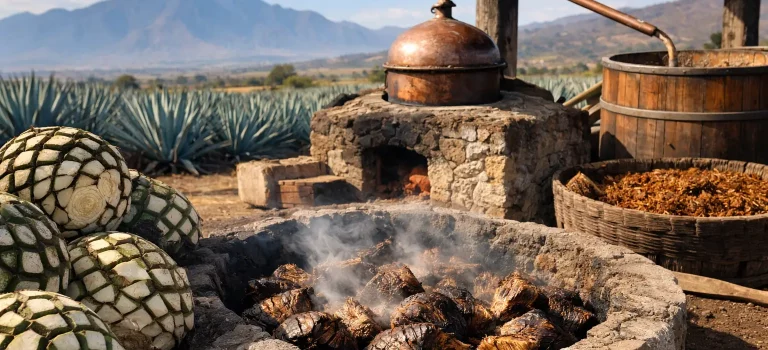
Traditional mezcal production commonly cooks piñas in an earthen pit oven. The pit is heated with wood and hot stones, then layered with agave, natural fibers or plant material, and earth. Over several days, the agave slowly roasts, softening its fibers and converting complex carbohydrates into fermentable sugars.

This is the step most associated with mezcal’s recognizable smoky aroma. Yet smoke is only one note in a much larger composition. A careful roast can offer baked fruit, caramel, minerality, and a savory depth. An overly aggressive roast may dominate the spirit with char and ash. If a mezcal tastes intensely smoky, that may reflect the cooking style, but it does not define quality by itself.

Not every mezcal uses a pit oven. Some producers cook agave in above-ground masonry ovens, while others use autoclaves or steam pressure systems. These approaches can reduce smoke and improve efficiency, producing a cleaner agave-forward profile. Traditional does not always mean superior, and modern equipment does not automatically mean industrial or characterless. The meaningful question is whether the process serves the producer’s intended style without compromising integrity.

Milling: Breaking Down the Cooked Piñas

Once cooked, the softened agave must be crushed to expose its sweet fibers. The iconic method uses a tahona – a large stone wheel, often pulled by a horse, mule, or tractor, that circles a shallow stone basin. The wheel crushes the agave into a fragrant, fibrous mash called bagazo.

Tahona milling is romantic for good reason: it is slow, physical, and visually unforgettable. But it is not the only legitimate method. Some palenques use mechanical shredders, wooden mallets, or small mills. Mechanical milling can be more efficient and less labor-intensive, while tahona crushing may contribute texture and a particular extraction style. The resulting flavor depends on much more than the mill alone, including roast level, water, fermentation time, and distillation choices.

Fermentation: Letting the Place Speak

The crushed agave, often including its fibers, moves into fermentation vats. These may be open wooden tinas, stone vessels, masonry tanks, or other containers. Water is added, and naturally occurring yeasts begin converting sugars into alcohol.

This stage is beautifully unpredictable. Ambient yeasts, local temperature, altitude, water quality, and the material of the vessel all influence fermentation. A warm day may accelerate it; a cool night may slow it down. Some batches finish in a few days, while others take longer. The maestro mezcalero listens, smells, tastes, and watches for readiness rather than relying only on a clock.

Many traditional producers ferment without commercial yeast, allowing microorganisms from the agave, air, vessels, and palenque environment to do their work. This can create striking complexity, though it also demands close attention. A producer seeking consistency at larger scale may choose more controlled fermentation. Neither path should be reduced to a slogan. What matters is transparency, skill, and the final spirit’s balance.

Distillation: Concentrating Flavor and Character

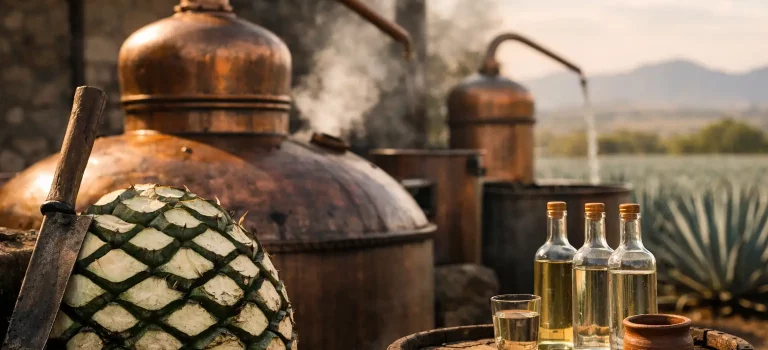
Fermented agave mash is distilled, usually twice, although some producers distill more or less depending on their practice. Copper pot stills are common and can help create a polished, expressive spirit. Clay pot stills, used in certain regions and traditions, may bring a more earthy, textured profile. In some places, distillation occurs in small, rustic stills fashioned from local materials.

Crucially, mezcal is often distilled with the fermented fibers still present. This contributes weight, aroma, and a distinctly agave-driven character. During distillation, the producer separates the run into portions. The early and late fractions require careful handling, while the heart of the run becomes the foundation of the final mezcal.

This is also where a skilled producer makes delicate decisions about proof. Some mezcals are bottled at a lower proof for broad approachability; others remain at a higher proof, preserving vivid aromatics and structure. High proof is not a challenge to endure. With a few drops of water, it can reveal ripe fruit, florals, pepper, and mineral notes that were initially hidden.

Traditional, Artisanal, and Ancestral Mezcal

You may see these terms on a label, and they refer to regulated production categories rather than simple marketing language. Mezcal is the broad category and can include more modernized techniques. Artisanal mezcal requires certain traditional practices, such as cooking agave in pit or masonry ovens and distilling in direct-fire stills. Ancestral mezcal follows even more restrictive methods, typically requiring pit-roasting, hand or animal-powered milling, and clay-pot distillation.

These categories are useful, but they are not a scorecard. An ancestral mezcal can be mesmerizing, yet its production may be extremely limited and labor-intensive. An artisanal espadín can offer extraordinary clarity and value. The most rewarding bottle is often the one whose technique, agave, place, and maker all make sense together.

What to Notice When You Taste Mezcal

Skip the salt-and-lime routine for a first taste. Take a small sip, let it rest on your palate, and breathe gently through your nose. Notice whether the aroma suggests cooked agave, tropical fruit, clay, green herbs, pepper, leather, or smoke. Then consider texture: is it light and bright, oily and rich, silky, mineral, or pleasantly rustic?

Mezcal is best approached slowly, preferably at room temperature and from a small copita or tasting glass. Orange slices with sal de gusano can be a wonderful accompaniment, but they should frame the experience rather than erase the spirit’s detail. A thoughtfully selected chocolate, fruit, or regional bite can reveal another side of the pour as well.

The next time you encounter a bottle, ask about the agave, the village, the cooking method, the fermentation vessel, and the type of still. Those questions are not meant to make mezcal feel complicated. They make the ritual more generous: a toast to the land, the maker, and the singular path that brought that remarkable spirit to your glass.
Your Guide to Agave Distillation in Mexico

Your Guide to Agave Distillation in Mexico

A bottle of tequila or mezcal begins its most dramatic transformation long before it reaches a glass in Cabo. Heat turns dense agave starches into fermentable sugars. Fermentation brings those sugars to life. Then distillation concentrates a field of aromas – roasted fruit, wet earth, pepper, herbs, smoke, and minerality – into a spirit with a distinct sense of place. This guide to agave distillation follows that journey and explains why two clear spirits can taste worlds apart.

For a curious traveler, understanding the process changes the tasting experience. You stop asking only whether a spirit is smooth and start noticing how it was cooked, what it was fermented in, what kind of still shaped it, and whose hands guided each decision.

Agave Is the Beginning, Not the Whole Story

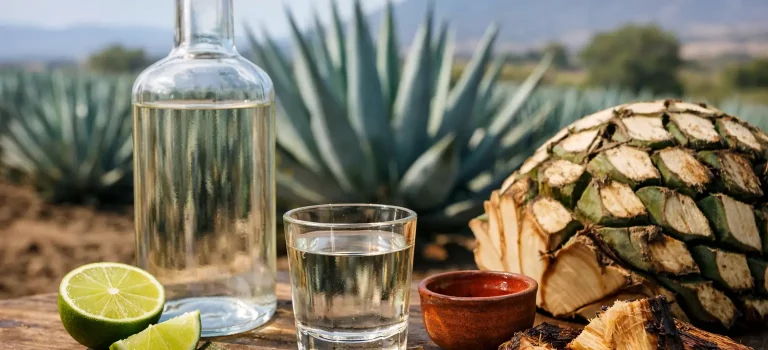
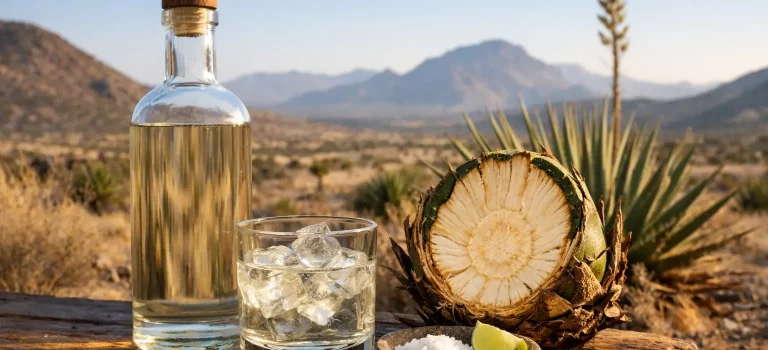
Agave is often called a cactus, but it is a succulent. Its heart, the piña, is harvested after years of growth and carries the carbohydrates needed to make agave spirits. Blue Weber agave is the sole permitted variety for tequila. Mezcal can be made from many varieties, including espadín, tobalá, arroqueño, tepeztate, and cuishe, each with its own growing cycle, yield, and aromatic personality.

The species matters, but terroir matters too. Altitude, rainfall, soil, maturity at harvest, and local production traditions all leave their mark. A highland blue agave may offer generous fruit and floral notes, while a lowland expression can feel more herbal, peppery, and earthy. With mezcal, the contrast can be even more striking because different agaves and production methods often coexist within the same broad category.

A useful distinction: not every iconic Mexican distillate is made from agave. Sotol comes from desert spoon, a different plant entirely, while Pox is traditionally made with corn, sugarcane, and wheat. Raicilla and Bacanora are agave spirits, but their regional rules and traditions differ from tequila and mezcal.

Guide to Agave Distillation: Cooking Creates the First Flavor Layer

Raw agave piñas are fibrous and full of inulin, a complex carbohydrate. They must be cooked to convert that inulin into sugars that yeast can ferment. The cooking method is one of the clearest clues to a spirit’s eventual profile.

For traditional mezcal, piñas are frequently cooked in earthen pits lined with volcanic stone and heated with wood. The agave is covered with fiber, earth, and sometimes tarps, then left to roast for several days. This is where the recognizable smoky character in many mezcals begins. Smoke is not simply added later. It is integrated into the cooked agave itself, alongside roasted pumpkin, charred citrus peel, and savory earthiness.

Tequila producers commonly use brick ovens, called hornos, or steam-powered autoclaves. A brick oven can cook agave slowly and develop deep, sweet, cooked-agave notes. Autoclaves shorten the process through pressure and steam, which can be efficient while still producing excellent tequila in the right hands. Some larger operations use diffusers, which extract sugars through a highly industrial process. The result can vary widely, and many enthusiasts seek out producers using cooked agave and more traditional extraction methods because they value the richer texture and more recognizable agave character.

There is no single rule that makes one method automatically superior. A carefully run autoclave can make compelling tequila, and a pit-roasted mezcal can be poorly balanced if the roast is mishandled. The point is to recognize that technique is flavor, not just factory logistics.

Milling, Water, and Fermentation Build Complexity

After cooking, the softened agave must be crushed or milled to release its sugary juices. The old-world image is the tahona: a heavy volcanic stone wheel pulled around a circular mill. It crushes agave slowly and often includes some fiber in the fermentation, contributing body and earthy, vegetal depth.

Modern roller mills are faster and more common, particularly in tequila production. They can produce beautifully clean, focused results, although the mouthfeel may differ from a fiber-rich tahona fermentation. Some producers combine methods, which is another reminder that labels rarely tell the full story.

The extracted juice, or a mixture of juice and fibers, moves into fermentation vessels. These can be open wooden vats, stone tanks, stainless steel, or plastic containers, depending on the producer and region. Native yeasts from the environment may drive fermentation naturally, while other producers use selected yeast strains for consistency.

Fermentation is less visible than a roaring pit oven, yet it is one of the most expressive stages. Temperature, water source, vessel material, local microbes, and fermentation time influence whether the finished spirit feels tropical and fruity, savory and lactic, bright and citrusy, or deeply herbal. This is why a tasting is best approached with an open nose. The agave may be the protagonist, but yeast and water are essential supporting characters.

The Still Does Not Erase Origin

Distillation separates and concentrates alcohol and aromatic compounds from the fermented mash. Most agave spirits are distilled twice, though the precise approach depends on local tradition and the producer’s desired style.

Copper pot stills are common because copper helps manage certain sulfur compounds and can produce a clean, expressive spirit. Some mezcal producers use clay pot stills, which may create a more rustic, textured, and earthy profile. Others use hybrid or small column stills, often aiming for a particular balance of purity, weight, and aromatic lift.

During a run, the distiller makes cuts: separating the early portion, commonly called heads, from the prized heart and the later tails. It is tempting to describe this as a simple mechanical division, but expert distillation is sensory work. The distiller smells, tastes, watches the flow, and adjusts to the individual batch. A little more texture from the later run may be welcome in one mezcal; a bright, precise cut may be the goal for a tequila intended to showcase fresh cooked agave.

Proof is also a creative decision. Some spirits are bottled at a familiar 40% alcohol by volume, while others are released at higher proof to preserve weight, aroma, and intensity. Adding water after distillation can soften a spirit, but it can also shift how aromas open in the glass. Higher proof is not automatically better. It often asks for a slower sip, a few drops of water, or a thoughtful food pairing.

Why Pearling Is Part of the Conversation

In a guided tasting, you may see a host gently shake a bottle or pour a small stream to observe bubbles, known as pearls. This practice, often called pearling, has long been used as an informal indication of alcohol strength and texture. Persistent small bubbles can suggest a spirit with body, though they are not a laboratory measurement or a guarantee of quality.

Pearling is most meaningful as an invitation to pay attention. Watch the bubbles, then move to the aroma. Notice whether the spirit feels oily, silky, lean, or bright on the palate. Traditional knowledge and modern analysis do not need to compete. One honors lived craft; the other confirms technical precision.

How Distillation Explains What You Taste

When tasting tequila, mezcal, raicilla, or Bacanora, begin with the cooked-agave aroma before searching for smoke, pepper, fruit, or flowers. Then ask what production choice may be behind the sensation. Roasted notes can point to pit cooking. A broad, savory texture may reflect fermentation with fibers or a clay still. Brightness and clarity can come from a clean fermentation and carefully managed copper distillation.

Aging adds another dimension, especially in reposado and añejo tequila, where oak can bring vanilla, baking spice, caramel, and dried fruit. But barrel character should not obscure the agave. For someone learning the category, tasting a blanco tequila or joven mezcal first is often the most direct way to meet the raw material and the maker’s decisions.

At Santos Destilados, a guided pour can make those connections tangible: a rare bottle, a well-chosen chocolate, and a conversation about the handwork behind each aroma. The best next step is simple: taste slowly, ask how the agave was cooked and distilled, and let the answer lead you toward the regions and producers that speak to your palate.

What Is Sotol Liquor? Mexico’s Desert Spirit

What Is Sotol Liquor? Mexico’s Desert Spirit

A sip of sotol can feel like standing in Northern Mexico after a summer rain: dry earth, green herbs, peppery brightness, and a quiet mineral edge. For travelers who already know tequila and mezcal, the question “what is sotol liquor?” opens the door to a distinctly different Mexican spirit – one shaped not by agave, but by the desert.

Sotol is an artisanal distilled spirit made from the desert spoon plant, known botanically as Dasylirion. It has deep roots in Chihuahua, Durango, and Coahuila, where the plant grows across high desert landscapes. The result is often elegant and expressive rather than aggressively smoky: a spirit with a strong sense of place, and plenty to discuss at the tasting table.

What Is Sotol Liquor, Exactly?

Sotol is a Mexican distilled spirit produced from Dasylirion, a hardy, spiky plant that grows wild in the Chihuahuan Desert. Despite its agave-like appearance, desert spoon is not an agave. That single botanical distinction changes nearly everything, from the raw material to the flavor profile and the traditions surrounding its production.

The word sotol may refer to both the plant and the spirit made from it. While indigenous communities in Northern Mexico have used the plant for centuries, commercial sotol developed as a regional distilling tradition in the north. Today, the category has protected designation of origin status in Chihuahua, Durango, and Coahuila, tying authentic production to the regions where its culture and landscape belong.

For a first-time taster, the easiest comparison is this: tequila is made from blue Weber agave, mezcal is made from agave species, and sotol comes from desert spoon. They are Mexican relatives, but they are not interchangeable.

From Desert Spoon to Glass

Making sotol begins with harvesting the plant’s dense central core, often called the piña because it resembles the heart of an agave. Desert spoon grows slowly in a demanding environment, and responsible producers must respect that pace. Wild harvesting can create extraordinary character, but it also makes sustainable sourcing essential. A bottle is more meaningful when the producer is transparent about where and how its plants are gathered or cultivated.

The hearts are cooked to convert their natural carbohydrates into fermentable sugars. Depending on the producer, they may be roasted in underground earthen pits, baked in ovens, or cooked with steam. This is one reason sotol can range so widely in style. Earthen roasting can bring smoke and roasted vegetal notes, while oven or steam cooking may preserve a cleaner, greener expression of the plant.

After cooking, the material is crushed, fermented with water and yeast, then distilled – commonly in copper or stainless steel stills. Small variations matter. Water source, fermentation temperature, wild or selected yeasts, and the distiller’s cut decisions all leave their signature on the final spirit.

You may also see a producer demonstrate pearling: the small chain of bubbles that forms when the spirit is poured or shaken. Traditionally, distillers have observed these pearls as one practical indication of texture and alcohol strength. It is a beautiful ritual and a piece of distilling heritage, though it is not a substitute for formal proof measurement or a guarantee of quality.

How Does Sotol Taste?

There is no single sotol flavor, which is precisely why the category rewards curiosity. A well-made bottle can be crisp and grassy, with cucumber, olive brine, sage, eucalyptus, citrus peel, white pepper, and wet stone. Others lean savory and earthy, with roasted squash, pine, leather, or gentle smoke. Aged expressions may gain vanilla, caramel, baking spice, and oak, but the best ones still let the desert plant speak.

Compared with tequila, sotol is often less sweet and more herbal or mineral. Compared with mezcal, it can be less smoky, although pit-roasted examples can absolutely carry smoke. These comparisons are useful starting points, not rules. A bright, unaged sotol from Chihuahua and a barrel-aged, roasted sotol from Durango may feel like entirely different spirits.

That variation makes provenance worth asking about. The producer, plant source, cooking method, still type, and maturation all matter more than a broad category label. If you enjoy a grassy blanco tequila, seek a clean, fresh sotol. If you favor savory mezcal with a mineral finish, look for a traditionally roasted expression. If bourbon is your usual order, an aged sotol can offer a fascinating bridge – oak structure with an unmistakably Mexican desert core.

Sotol vs. Tequila vs. Mezcal

Tequila has the narrowest definition of the three. It must be made from blue Weber agave and produced in designated regions, principally Jalisco. Mezcal can be made from several agave species in authorized Mexican states, and its varied production methods create a broad family of styles.

Sotol stands apart because of its plant. Dasylirion is not agave, and it does not produce the same concentrated sweetness that many drinkers associate with tequila. Its identity is more desert-driven: herbal, saline, dry, and occasionally wild around the edges in the best possible way.

There is another practical difference for collectors. Tequila and mezcal are widely represented on American back bars, while exceptional sotol can still be difficult to find. That scarcity should not be confused with automatic superiority, but it does make a thoughtful tasting especially valuable. The right pour can reveal a regional tradition that many visitors to Mexico have never encountered.

The Best Way to Drink Sotol

Start neat. Serve sotol at room temperature in a small copita, flute-shaped glass, or a wine glass that allows the aromas to gather. Take a small first sip, then pause. The finish often tells the real story: some expressions begin soft and green, then turn peppery, mineral, or gently smoky as they linger.

Avoid treating a special sotol like a quick shot. Salt and lime are not wrong if that is how you enjoy spirits, but they can cover the subtleties that make sotol compelling. A slice of orange, a touch of local chocolate, roasted nuts, or a savory bite can be a more revealing companion. Chocolate with measured bitterness and fruit notes can soften the spirit’s dry edge without erasing its character.

Sotol also makes a serious cocktail base. Its herbal freshness works beautifully in a martini-style serve, a desert-inspired highball with sparkling water and citrus, or a margarita variation where its savory profile replaces tequila. The trade-off is simple: cocktails can make sotol more approachable, while sipping it neat gives you the clearest view of the distiller’s craft. Start with the neat pour, then decide how you want to play.

Why Sotol Deserves a Place in Your Mexico Experience

Sotol is not a novelty bottle to bring home simply because it is rare. At its best, it is a living expression of Northern Mexico – its climate, plants, communities, and patient distilling knowledge. It asks for a little more attention than a familiar tequila order, then rewards it with flavors that feel both ancient and unexpectedly refined.

At Santos Destilados in Cabo, a guided tasting can place sotol beside tequila, mezcal, raicilla, bacanora, or pox, making the contrasts immediate rather than abstract. With an expert pour and a thoughtful food pairing, even a newcomer can recognize how dramatically Mexico’s regional spirits can differ.

The next time a menu offers sotol, let curiosity lead. Ask where it was made, how the plant was cooked, and whether it was rested in oak. Then take a slow sip and let the desert have the last word.

Private Tequila Event Ideas for Cabo Celebrations

Private Tequila Event Ideas for Cabo Celebrations

A private event in Cabo should give your guests more than a beautiful photo and a strong first pour. The best private tequila event ideas create a sense of place: the scent of cooked agave, the bright lift of citrus, the story behind a small producer, and the shared pleasure of discovering that tequila can be far more layered than expected.

For a birthday dinner, milestone anniversary, executive retreat, wedding weekend, or friends’ escape, tequila offers a natural center of gravity. It is festive, distinctly Mexican, and remarkably versatile when treated with the respect it deserves. The difference lies in the curation. A thoughtful experience invites guests to taste with confidence, learn without feeling lectured, and leave with a genuine connection to Mexico’s agave traditions.

Private Tequila Event Ideas That Feel Personal

Build a guided tasting around discovery

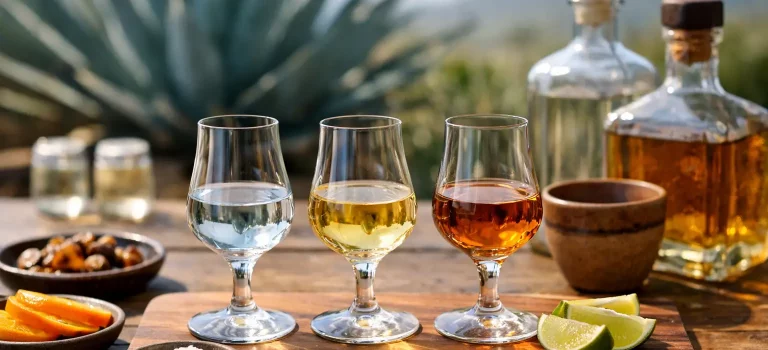
A guided tequila tasting is the strongest foundation for an intimate group gathering because it gives everyone a shared experience from the first glass. Rather than lining up random bottles, organize the tasting as a progression: a vibrant blanco, an expressive reposado, and an elegant añejo, followed perhaps by an extra añejo or limited-production release for the final pour.

The magic is in the conversation around the glasses. Guests can compare the fresh, peppery character of an unaged tequila with the vanilla, baking spice, and toasted oak that emerge during barrel aging. They can learn why 100% Blue Agave matters, how cooking and fermentation shape aroma, and why a label’s production choices can be as revealing as the age statement.

For mixed groups, keep the language inviting. A seasoned spirits collector may want details about tahona milling, wild yeast, copper stills, or barrel provenance. A first-time visitor may simply want to know why one blanco tastes like citrus and herbs while another carries a richer, earthier profile. Both guests deserve a place at the table.

Pair tequila with Mexican chocolate

Tequila and chocolate offer a sophisticated alternative to a standard cocktail-hour spread. The pairing works especially well with reposado and añejo expressions, whose caramel, dried fruit, and oak notes can echo the depth of artisanal Mexican chocolate.

The key is contrast as much as harmony. A crisp blanco can brighten a dark chocolate with sea salt. A reposado can sit beautifully beside cacao accented with cinnamon or toasted nuts. A richer añejo may suit a darker, less sweet piece where the cacao has enough intensity to hold its own.

Present the chocolate as a tasting, not an afterthought. Ask guests to take a small sip, let it rest on the palate, taste the chocolate, then return to the tequila. That second sip often reveals a completely different finish. It is a small ritual, but it turns a social gathering into a memorable sensory experience.

Host a tequila and coastal cuisine dinner

For groups celebrating over a longer evening, build the event around a multi-course dinner. Cabo’s coastal setting makes seafood a natural partner, but the pairing should follow the tequila rather than force every course into the same formula.

A mineral-driven blanco can complement fresh ceviche, oysters, or sashimi-style local fish. A reposado has enough roundness for grilled shrimp, octopus, or fish with a mole-inspired sauce. Añejo is better saved for dishes with deeper flavors, such as duck, short rib, or a final course with roasted fruit and chocolate.

There is a trade-off here: a formal dinner gives the evening a polished rhythm, while a tasting-focused gathering creates more room for questions, stories, and side-by-side comparison. If the guests are serious food lovers, dinner is a wonderful choice. If the goal is connection and discovery, a guided tasting with small bites may be the better format.

Create a blind tasting with a playful edge

A blind tasting adds friendly suspense without turning the event into a test. Cover the bottles and invite guests to compare three tequilas by aroma, texture, and finish. They might guess which one is blanco, which was aged in American oak, or which comes from a highland versus lowland agave profile.

This format works beautifully for corporate groups and friends who enjoy a little competition. Keep the prompts sensory rather than technical: Which pour feels brightest? Which one has the longest finish? Which would you serve with a grilled dinner? Guests are often surprised by their own preferences when brand names and price assumptions are removed.

Offer small cards for notes, but do not make the room feel like a classroom. The goal is laughter, curiosity, and a few unexpected favorites. Reveal each bottle at the end, then let guests revisit the pours they loved most.

Give Guests a Window Into Agave Culture

Go beyond tequila, thoughtfully

Tequila may be the headline, but a private event becomes more meaningful when it places tequila within the wider family of Mexican distillates. One carefully chosen mezcal can show how agave, fire, and regional tradition create a very different profile. A pour of sotol, raicilla, bacanora, or pox can open an even wider conversation about Mexico’s remarkable diversity of regional spirits.

This is not about overwhelming the table with too many categories. Four or five well-selected pours are usually more memorable than a dozen samples. Start with tequila as the common language, then introduce one unexpected spirit as the conversation piece. Guests leave with a richer understanding of why Mexican distillates cannot be reduced to one flavor or one ritual.

A knowledgeable host can also demonstrate pearling, the traditional observation of bubbles that form when a spirit is poured. It is an engaging visual moment and a doorway into discussions about texture, proof, and craft. It should never be presented as the sole measure of quality, but it is a beautiful detail when explained in context.

Let cocktails have their moment

A tequila event does not have to be limited to neat pours. A refined cocktail component can make the experience more welcoming for guests who are still building confidence with sipping spirits.

The best approach is to feature one or two cocktails that respect the tequila. A properly balanced Tommy’s Margarita shows how blanco tequila, fresh lime, and agave nectar can be clean and expressive. A Paloma, made with fresh citrus and a thoughtful salt garnish, is ideal for Cabo’s warm afternoons and sunset gatherings.

Avoid turning the occasion into an unlimited cocktail service if the purpose is tasting. Cocktails can open or close the event, while the guided pours remain at the center. Water, thoughtful pacing, and substantial food should be part of the host’s plan from the beginning.

How to Shape the Experience for Your Group

The best private tequila event ideas begin with a simple question: what should guests feel when they leave? For a wedding party, the answer may be celebratory and easygoing. For a leadership team, it may be connected, informed, and refreshed. For a birthday group, it may be indulgent, surprising, and unmistakably Cabo.

Plan for about 60 to 90 minutes for a focused tasting. Add time if you are including dinner, cocktails, or a broader exploration of agave spirits. Smaller groups create the most intimate exchange, especially when guests can ask questions and revisit their favorite expressions. Larger groups can still feel personal, but they benefit from a clear structure and a host who can keep the energy moving.

Consider the drinking experience beyond the bottle. Proper glassware matters. So does the order of pours, the temperature of the room, the quality of the ice in cocktails, and the pacing between tastes. A premium event feels effortless because those details have already been considered.

At Santos Destilados, a private tasting can bring together rare bottles, local gastronomic pairings, and expert guidance in a setting designed for genuine discovery. For visitors who want something more meaningful than a generic resort activity, it is a chance to celebrate with the true character of Mexican spirits close at hand.

Choose a format that leaves space for conversation, a little surprise, and the slow pleasure of a final sip. That is where a private tequila gathering becomes part of the story your guests will tell long after Cabo is behind them.

Is a Walk-In Tasting or Reservation Better in Cabo?

Is a Walk-In Tasting or Reservation Better in Cabo?

A warm Cabo afternoon has a way of changing plans. You may set out for a beachside lunch, spot a bottle of rare mezcal in a shop window, and suddenly want to understand what is in the glass. Choosing between a walk-in tasting or reservation is not simply a scheduling question. It shapes the pace, privacy, and depth of your introduction to Mexico’s extraordinary distillates.

For some travelers, the best moment is the unplanned one: stepping in from the street, taking a seat, and letting a knowledgeable host pour the first expression. For others, a reserved tasting becomes the highlight of the trip, with time to gather friends, celebrate, and explore agave spirits with full attention. Both can be memorable. The right choice depends on what you want the experience to hold.

What Changes Between a Walk-In Tasting or Reservation?

The spirit in the glass may be exceptional either way, but the format changes the rhythm. A walk-in tasting is designed for curiosity in motion. It offers a welcoming, accessible way to pause during your day and taste with context, whether you are new to tequila or have a favorite mezcal already waiting on your home bar.

A reservation creates more room around the pours. It is particularly valuable for groups, celebrations, guests with a focused interest in a category, or anyone who wants a more private setting. Instead of fitting a tasting into the day, you give the experience its own place on the itinerary.

Neither option is automatically more authentic. Authenticity comes from what is being poured, who is guiding you, and whether the story honors the people, places, and methods behind the bottle. A thoughtfully led spontaneous tasting can be remarkably personal. A private reservation can be wonderfully relaxed rather than formal. The distinction is not quality. It is intention.

When a Walk-In Tasting Is the Right Move

Walk in when curiosity has struck and your schedule still has room to breathe. Perhaps you have an hour before dinner in downtown Cabo, want an elevated alternative to another poolside cocktail, or are deciding which bottle deserves space in your luggage. A guided walk-in tasting turns that impulse into a genuine cultural stop rather than a quick sample across a counter.

This format is especially rewarding for first encounters with Mexican spirits beyond familiar tequila. You might compare a bright, herbaceous blanco tequila made from 100% Blue Agave with a smoke-kissed mezcal, then discover that sotol comes from the desert spoon plant rather than agave. Raicilla may bring a wild, savory edge; bacanora can feel earthy and peppery; pox offers a completely different regional tradition from Chiapas. One well-paced tasting can replace assumptions with real sensory memory.

A walk-in visit also makes sense for couples or solo travelers who prefer flexibility. There is pleasure in following the energy of the day. You can taste a few expressions, ask the questions that matter to you, and linger over aromas of cooked agave, citrus peel, wet stone, cacao, or roasted pepper without committing an entire evening in advance.

The trade-off is availability. A boutique tasting room has an intimate scale by design, and peak periods can be busy. If your group is large, if timing is nonnegotiable, or if you have your heart set on a longer guided experience, a reservation offers more certainty.

Why a Reservation Is Worth Planning

Reserve when the tasting itself is the occasion. A private agave experience gives your host time to shape the pours around your group, your prior knowledge, and your palate. It is ideal for a birthday toast, a bachelor or bachelorette gathering with substance, a sophisticated client outing, or a family meal that deserves a more meaningful beginning than the usual round of margaritas.

The greatest advantage is pace. Fine spirits should not be rushed. With a dedicated reservation, there is time to notice how aroma changes after a few minutes in the glass, how texture settles on the palate, and how a finish can move from mineral to sweet, floral to savory. You can discuss traditional cooking methods, fermentation, copper versus clay distillation, and the influence of altitude or agave maturity without watching the clock.

A reservation is also the stronger option for a curated pairing. Mexican distillates come alive beside the right bite. Artisanal chocolate can emphasize the cocoa, fruit, and spice in a rich añejo or a complex mezcal. Local savory accompaniments can reveal salinity, sweetness, and structure that might otherwise go unnoticed. Pairing is not decoration. It helps the palate understand why two spirits from the same country can feel worlds apart.

For collectors and serious enthusiasts, reserved time can make it easier to explore smaller-production labels and less familiar categories with the attention they deserve. Rare bottles are not interesting merely because they are hard to find. Their value lies in their origin, their producers, and the decisions made in every stage of production. A proper tasting gives those details their place.

Choose Based on Your Cabo Itinerary

If you are building a loose day around the marina, galleries, shopping, and dinner, the walk-in option keeps your plans open. It is a polished, low-pressure way to add something distinctly Mexican to the day. Stop in because you are curious, not because your calendar told you to be there.

If you are traveling with six friends who all need a meaningful activity at the same time, reserve. If you are celebrating a milestone, reserve. If you want to taste before buying a special bottle, but need expert guidance and a quieter setting, reserve. A planned experience lets everyone arrive ready to enjoy rather than coordinating messages while the first pour waits.

There is also a middle ground. You may begin with a walk-in tasting, find a category that captivates you, and later return for a more focused private exploration. Tequila and mezcal are not single-note spirits, and neither are the regions that make them. A first tasting should leave you more curious than certain.

How to Get More From Either Experience

Come with curiosity, not a fixed idea of what a great spirit must taste like. Smoke is not the only measure of mezcal quality, and an expensive bottle is not necessarily the one that will suit your palate. Tell your host what you usually drink, whether that is bourbon, wine, gin, cocktails, or almost nothing at all. That starting point helps create a tasting that feels approachable without becoming generic.

Taste slowly. Start with the aroma rather than taking an immediate sip. Let a small amount rest on your tongue, then notice texture, sweetness, spice, minerality, and finish. Water is your ally, particularly in Cabo’s sun. A well-led tasting is about appreciation, not speed.

Ask about the producer and place of origin. Ask how the agave was cooked, whether it was crushed by tahona or mill, how long it fermented, and what kind of still was used. If your host demonstrates pearling, watch the small bubbles that form when a spirit is poured or shaken. It is a traditional visual clue connected to texture and alcohol strength, though never a substitute for thoughtful production and a proper tasting.

At Santos Destilados, the goal is not to overwhelm you with labels. It is to give every pour a story, every comparison a purpose, and every guest a more confident way to enjoy Mexico’s liquid heritage.

Let the Moment Decide

The best choice is the one that leaves enough space to taste with attention. Walk in when Cabo gives you an unexpected opening and the scent of roasted agave calls you inside. Reserve when you want to gather your people, slow the evening down, and make the tasting a memory with its own distinct flavor.

How to Read Mezcal Labels Before You Buy

How to Read Mezcal Labels Before You Buy

A mezcal label can look like a small work of art, but it is also a passport. It can tell you which agave was used, where it grew, who distilled it, and whether the spirit was made in a modern facility or through deeply traditional methods. Learning how to read mezcal labels turns a beautiful bottle into something far more meaningful: a chance to choose according to your own palate, curiosity, and respect for the people behind it.

For travelers in Cabo, this matters. The best bottle is not automatically the oldest, smokiest, rarest, or most expensive one. It is the mezcal whose story, production, and flavor profile suit the moment you want to create.

Start With the Word “Mezcal”

First, look for mezcal itself as the regulated category, rather than a spirit that simply uses agave imagery or borrows mezcal’s visual language. Certified mezcal is produced within Mexico’s legally defined Denomination of Origin and must meet established production and labeling standards.

A legitimate label will typically identify the product as Mezcal and include certification information, a lot number, alcohol content, bottler or producer details, and its Mexican origin. The fine print is not decorative. It provides useful traceability, especially when you are comparing bottles in a serious spirits shop.

You may also see an official standard reference, commonly beginning with “NOM.” This identifies the production facility or entity operating under Mexican regulations. It is a helpful accountability marker, but it is not a flavor score. Two excellent mezcals can share a NOM, and a small producer can make very different expressions across agaves and batches.

Read the Agave Like You Would a Grape Variety

The agave named on a bottle is often the most useful clue to what is in your glass. Mezcal can be made from dozens of agave species and varieties, each shaped by its genetics, elevation, soil, maturity, and the hands that turn it into spirit.

Espadín is the agave you will encounter most often. It is widely cultivated, relatively accessible, and wonderfully expressive. A well-made espadín can offer roasted fruit, fresh herbs, earth, citrus peel, and a clean thread of smoke. It is an excellent place to begin, but it should never be treated as a lesser choice simply because it is familiar.

Other names signal a different experience. Tobalá is often associated with aromatic, floral, tropical, and mineral notes. Tepeztate, which can take decades to mature, may feel intensely herbal, green, peppery, and wild. Arroqueño can bring rounder fruit and a rich, structured palate. Cuishe, madrecuixe, and other karwinskii agaves often show savory, vegetal, mineral character.

The name may appear as “agave,” “maguey,” a scientific name, or a regional common name. These terms can vary. Ask what the producer means if you have the opportunity, especially with terms such as “wild.” Wild-harvested agave may be scarce and compelling, but “wild” alone does not guarantee quality, sustainability, or a better drinking experience. Responsible harvesting and replanting matter as much as rarity.

Find the Place of Origin

A mezcal label should identify where it was made, often by state and sometimes by municipality or community. Oaxaca is the best-known mezcal-producing state, and for good reason, but it is not the only one. Mezcal may also come from regions including Durango, Puebla, Guerrero, Michoacán, San Luis Potosí, and Zacatecas.

Origin is not a shortcut to flavor, but it gives you a valuable starting point. High-altitude, dry landscapes can produce a different kind of concentration than warmer valleys. Local water, ambient fermentation, agave availability, and community tradition all leave their mark.

Within Oaxaca, a label naming places such as Santiago Matatlán, San Baltazar Guelavía, Sola de Vega, Santa Catarina Minas, or Miahuatlán may reveal more than a broad state designation. It points toward a particular local culture of mezcal. Still, resist turning regional names into rigid rules. Every palenque and every batch has its own voice.

The Producer Name Is One of the Best Details on the Bottle

Look for the maestro mezcalero, mezcalera, producer, or palenque named on the label. This is where a bottle becomes personal. Mezcal is not merely an ingredient list followed by a factory process. It is an agricultural spirit shaped by decisions: when agaves are harvested, how they are cooked, how long the mash ferments, how distillation cuts are made, and when a batch is ready.

Some brands place the producer’s name proudly on the front label. Others place it on the side or back. When a label gives clear producer and community information, it invites you to understand the mezcal as a specific work rather than a generic category.

At Santos Destilados, this is often where the most rewarding conversation begins. A guest may arrive asking for “a smoky mezcal” and leave fascinated by the work of a particular family, village, or distillation tradition.

Understand the Production Category

One of the most revealing lines on a label is the production category. Under Mexican mezcal standards, you may see Mezcal, Mezcal Artesanal, or Mezcal Ancestral.

Mezcal is the broadest category and allows more modernized production methods. That does not make it inferior. A skilled producer can make a vibrant, characterful mezcal within this category.

Mezcal Artesanal follows more traditional parameters. Agaves may be cooked in earthen pits, masonry ovens, or autoclaves; milling may involve a tahona, mallet, or mechanical methods permitted by the standard; and distillation is typically performed in copper or clay stills. It often offers a strong connection to regional craft, though the category alone cannot tell you whether a mezcal will be smoky, soft, or complex.

Mezcal Ancestral is the most restrictive category. It calls for more historic methods, including earthen-pit cooking, hand or animal-powered milling, and distillation in clay pots with direct fire. These bottlings can be extraordinary, textured, and deeply expressive. They can also be more expensive and less predictable, which is part of their charm. Choose them for curiosity and craftsmanship, not because the word “ancestral” automatically means better.

Don’t Skip the ABV and Batch Number

Alcohol by volume is a major part of mezcal’s personality. Many bottles land around 40% to 48% ABV, while some traditional-strength expressions rise above 50%. Higher proof can carry more aroma, weight, and energy, but it can also feel sharper if the spirit is not balanced or if you taste it too cold.

A 47% ABV mezcal is not necessarily “stronger” in the sense of being less refined. In fact, a producer may bottle at a higher proof because dilution would mute the agave’s character. Sip it slowly, take a small breath after each taste, and add a few drops of water only if you want to explore how it opens.

The lot or batch number matters because mezcal is agricultural and handmade. One batch may differ slightly from the next, even from the same producer and agave. That variation is not a flaw. It is evidence that the spirit was not engineered to taste identical forever.

Learn the Difference Between Joven, Rested, and Infused Styles

Most mezcal is bottled unaged, often labeled joven. This is where agave, fermentation, and distillation speak most clearly. For many enthusiasts, joven mezcal is the best window into a producer’s style.

You may also encounter mezcal madurado en vidrio, which rests in glass; reposado, which has spent time in wood; and añejo, aged longer in wood. Barrel aging can bring vanilla, spice, and softness, but it can also cover the high-toned minerality and cooked-agave character that make mezcal distinctive. Neither approach is universally better. If you love whiskey or aged tequila, a rested expression may be a graceful bridge. If you want the clearest sense of agave and place, begin with joven.

Terms such as abocado con and destilado con deserve special attention. Abocado con refers to mezcal that has been softened or flavored with an approved ingredient after distillation. Destilado con means ingredients were included during a subsequent distillation. The celebrated pechuga style belongs here, often incorporating seasonal fruits, nuts, spices, and, in some traditions, a chicken or turkey breast. Recipes vary dramatically, so read the label and ask what was used rather than assuming every pechuga tastes alike.

What a Label Cannot Tell You

A label can offer a remarkable amount of information, but it cannot replace tasting. It will not fully convey whether a mezcal feels like orange blossom, wet stone, cacao nib, roasted pineapple, bell pepper, leather, or campfire ash. Nor can it confirm whether its smoke is elegant or overpowering.

Price has limits as a guide, too. A costly bottle may reflect labor, low yields, aging agaves, remote transport, or a rare production method. It may also reflect scarcity and presentation. The right question is not “Is this the most expensive mezcal?” It is “What does this bottle represent, and is that what I want to taste or bring home?”

When you stand before a shelf of unfamiliar labels, start with the agave, region, producer, category, and proof. Then let your senses make the final decision. The finest mezcal bottle is not just one you recognize. It is one whose place, people, and flavor you will remember long after the last sip.

How to Taste Mezcal Neat With Confidence

How to Taste Mezcal Neat With Confidence

A great mezcal does not ask to be rushed. It asks for a quiet moment, a small pour, and enough attention to notice what the agave, the earth, and the maestro mezcalero have placed in the glass. If you are wondering how to taste mezcal neat, begin by letting go of the shot-glass ritual. This is not about proving your tolerance. It is about tasting a spirit with a sense of place.

Mezcal can be bright and tropical, deeply earthy, savory, floral, mineral, or gently smoky. Sometimes it is all of those things in one sip. The right approach gives those details room to appear.

How to Taste Mezcal Neat, Step by Step

Start with a modest pour, about half an ounce to one ounce. Mezcal is often bottled at a higher proof than many familiar spirits, and a smaller pour stays cool longer while giving you time to understand it. A wide, shallow clay copita is traditional and beautiful, but it is not mandatory. A small wine glass or Glencairn-style glass also works well because it concentrates the aromas without forcing you to inhale too aggressively.

Hold the glass by its base or stem if it has one. Your hands can warm the spirit quickly, and while a little warmth can open the aroma, too much heat can make alcohol feel sharper than it truly is.

Before you sip, look at the mezcal. Its color may be crystal clear, pale gold, or amber depending on whether it rested in wood. Color alone does not indicate quality. Many exceptional mezcals are unaged because their producers want the character of the cooked agave and fermentation to remain front and center. Notice the texture, too. Gently tilt the glass and watch how the liquid moves back down the sides.

Some producers and tasters also observe pearling, the small bubbles that form when mezcal is poured or lightly agitated. Fine, persistent pearls can be a pleasing sign of texture and alcohol content, but they are not a universal quality test. Bottle proof, glass shape, temperature, and pouring technique all affect what you see. Treat pearling as one clue in a larger sensory conversation, not a verdict.

Nose softly, then nose again

Do not bury your nose in the glass and take a deep breath. High-proof spirits can overwhelm your senses that way. Instead, hold the rim a few inches below your nose and take a gentle inhale. Move closer only as your palate and nose adjust.

Your first impression may be smoke, but stay with it. Smoke in mezcal comes from roasting agave piñas, often in earthen pits lined with hot stones, wood, and charcoal. Yet not every mezcal is intensely smoky, and smoke should not erase everything else. Depending on the agave variety, region, water, fermentation, and distillation, you may find roasted pineapple, green pepper, wet stone, cocoa, honey, herbs, leather, olive brine, citrus peel, or wildflowers.

Try nosing the mezcal with your mouth slightly open. This softens the alcohol and can help you identify more delicate aromas. There is no prize for naming the same notes as someone else. If a mezcal reminds you of rain on dry earth or grilled peaches, that is a valid part of your experience.

Take a tiny first sip

For the first sip, take less than you think you need. Let it touch the front of your tongue, then gently move it around your mouth before swallowing. Expect some warmth, especially if the mezcal is 45% ABV or higher. The goal is not to eliminate that heat but to distinguish alcohol from flavor.

Pause after swallowing. The finish is where many fine mezcals reveal their length and personality. Does it leave behind pepper, sweet agave, salt, fruit, ash, minerals, or a lingering savory note? Does the flavor feel clean and precise, or broad and rustic? Neither is automatically better. A small-batch mezcal can carry beautiful wildness, while another may be remarkably polished. What matters is balance and whether the flavors feel integrated.

Your second sip is usually more revealing. Once your palate has adjusted, the sweetness of cooked agave often becomes clearer, and the smoke may recede into the background. Sip slowly enough that each taste has time to finish before the next begins.

What You Are Actually Tasting

Mezcal is not one flavor profile. It is a broad family of Mexican agave spirits shaped by place and process. Espadín is the agave most visitors encounter first, and it can offer a generous introduction with fruit, herbs, smoke, and roasted sweetness. Wild or semi-wild agaves such as tobalá, madrecuixe, tepeztate, and arroqueño can be more floral, mineral, vegetal, or intensely structured, often with a higher price because they grow slowly and are produced in limited quantities.

The production method matters just as much. Roasting develops savory, smoky, and caramelized notes. Natural fermentation can bring tropical fruit, yogurt-like creaminess, or a subtle funk. Copper stills may produce a cleaner, brighter profile, while clay distillation can contribute an earthier, more textural character. The village, the season, the water source, and the producer’s decisions all leave a signature.

That is why it helps to ask a few direct questions when tasting: Which agave was used? Where was it made? Was it distilled in copper or clay? What is the bottle proof? A good host will answer with context, not jargon for its own sake. Those details make the glass more meaningful because they connect flavor to the people and landscape behind it.

Should You Pair Mezcal With Orange and Sal de Gusano?

You can, but you do not have to. Orange slices and sal de gusano, a traditional seasoning often made with dried chile, salt, and ground agave worm, are widely enjoyed alongside mezcal. They can refresh the palate and create a delicious contrast, especially with fruit-forward or savory pours.

The trade-off is that salt, chile, and citrus are powerful. If you are trying to understand a rare mezcal for the first time, taste it neat before reaching for the accompaniment. Then take a small bite of orange with seasoning and return to the glass. Notice what changes. A mineral mezcal may become sweeter; an earthy one may seem more peppery; a smoky pour may feel rounder.

Chocolate can be equally compelling, particularly dark Mexican chocolate with restrained sweetness. Its roasted cacao notes can echo the cooked agave and char of the roast. Again, begin with the mezcal alone. Pairing should frame the spirit, not cover it.

Common Mistakes That Hide a Great Mezcal

The fastest way to miss a mezcal’s character is to shoot it cold. Chilling suppresses aroma, and swallowing quickly bypasses the entire experience. Save the dramatic shot for a party if you wish, but do not use it as your benchmark for a thoughtfully made bottle.

Another mistake is assuming smoky means superior. Smoke is one expression of production, not a scorecard. Some of the most captivating mezcals are fragrant, green, saline, or floral rather than forcefully smoky. Likewise, a very high proof can be exciting and full of texture, but it may need more patience. Add a few drops of room-temperature water only after tasting it neat if the alcohol is obscuring the flavors. Water can open certain mezcals, though it can also thin their texture, so add it sparingly.

Finally, avoid judging an entire category from one bottle. Mezcal is too diverse for that. If your first pour feels aggressively smoky or unfamiliar, try another agave, a different region, or a producer using another distillation style.

Make the Tasting Feel Like a Visit, Not a Test

The best mezcal tastings are unhurried and social. Taste two or three expressions side by side, not six or eight. Begin with the lighter, more aromatic pour and move toward the richer or higher-proof selection. Keep still water nearby, take breaks, and have food available. Never drive after a tasting.

In Cabo, a guided tasting can turn a beautiful bottle into a fuller cultural encounter. At Santos Destilados, the value is not simply sampling a rare label. It is hearing the story of the agave, the roast, the distillation, and the region while your palate is discovering those ideas in real time.

Give each sip a little silence before you describe it. Mezcal rewards curiosity more than expertise, and the most memorable pour is often the one that makes you slow down long enough to taste where it came from.

Best Sipping Spirits From Mexico Beyond Tequila

Best Sipping Spirits From Mexico Beyond Tequila

A fine Mexican spirit does not need a cocktail shaker to make an impression. Set a small copita on the table, pour just enough to catch the light, and suddenly the room fills with roasted agave, damp earth, citrus peel, cooked fruit, desert herbs, or warm spice. The best sipping spirits from Mexico offer that kind of sense of place – and tequila is only the beginning.

For travelers in Cabo, this is an invitation to move beyond the familiar salt-and-lime ritual. Mexico’s great distillates reward a slower pace: a first aroma, a tiny sip, a pause, then another. Their character comes from geography, plant varieties, fermentation, stills, aging, and the hands of the producers who make them. There is no single “best” bottle for every palate, but there is a remarkable Mexican pour for nearly every curious drinker.

What Makes a Spirit Worth Sipping?

A sipping spirit should reveal itself gradually. It may be powerful, but alcohol should not be its only message. Look for balance between texture, aroma, sweetness, acidity, minerality, and finish. A good pour can be earthy and rustic, crystalline and bright, or barrel-aged and plush. What matters is that it has definition.

Production choices shape that definition. Agaves may be cooked in ovens, masonry pits, or autoclaves. Fermentation can be open-air and spontaneous or more tightly controlled. Distillation in copper, clay, or wood-fired stills leaves a different signature. In a guided tasting, you may even see pearling: the string of tiny bubbles that forms when a spirit is poured or shaken. It is a traditional visual clue to texture and proof, though it should never replace tasting with attention.

The most memorable bottles also carry origin honestly. A smoky mezcal from Oaxaca, a grassy sotol from Chihuahua, and a mineral tequila from the highlands of Jalisco should not be expected to taste alike. That contrast is precisely the pleasure.

The Best Sipping Spirits From Mexico to Know

Tequila: The Refined Starting Point

Tequila is made from Blue Weber agave within its protected regions, most famously Jalisco. For sipping, seek tequila labeled 100% agave. This is the category where cooked agave can shine with remarkable clarity: think citrus, pepper, honey, olive brine, fresh herbs, and baked tropical fruit.

A well-made blanco is often the most revealing choice because it has little or no barrel influence. It is also the best place to learn what a producer’s agave and distillation style truly taste like. Choose a blanco if you enjoy bright, clean spirits, fresh food, or a lively aperitif before dinner.

Reposado rests in oak for a minimum period, bringing softer edges and notes such as vanilla, baking spice, caramel, or toasted wood. Añejo spends longer in barrel and can offer a fuller, more contemplative profile. Extra añejo can be luxurious, but older is not automatically better. Heavy oak can obscure the agave, especially for drinkers who want a more vivid expression of Mexico rather than a whiskey-like finish.

Mezcal: Smoke, Yes – But So Much More

Mezcal is not one flavor. It is a broad family of agave distillates, usually associated with Oaxaca but produced across several designated Mexican states. Espadín is the most common agave, while wild and semi-wild varieties such as tobalá, tepeztate, arroqueño, and cuishe can bring strikingly different personalities.

Many mezcals are cooked in earthen pits, which can create smoke. Yet reducing mezcal to “smoky tequila” misses its real depth. Some mezcals suggest wet stone, green pepper, cacao, pineapple, leather, herbs, wildflowers, or savory broth. Others are intensely mineral and dry. The smoke may frame those notes, or barely appear at all.

For a first sipping mezcal, an artisanal espadín is often a welcoming choice, particularly one with ripe fruit and gentle smoke. For a more adventurous pour, compare two agaves from the same producer or two producers using the same agave. You will quickly understand why mezcal lovers speak about terroir with such excitement.

Sotol: The Desert’s Elegant Answer

Sotol is frequently placed beside agave spirits, but it comes from the desert spoon plant, or Dasylirion, rather than agave. Its home is northern Mexico, especially Chihuahua, Durango, and Coahuila. The plant grows slowly in dramatic desert landscapes, and the resulting spirit can feel beautifully wild and precise.

A fine sotol may offer pine, sage, green olive, wet granite, fresh grass, and a subtle saline quality. It tends to appeal to people who enjoy gin’s botanical edge or a dry, mineral wine. It is less sweet than many tequilas and often less overtly smoky than mezcal, making it an exceptional choice before a rich meal or alongside seafood.

Raicilla: Jalisco’s Untamed Secret

Raicilla comes from Jalisco, the same state most associated with tequila, but it follows its own traditions and uses agaves that differ from Blue Weber. Depending on where and how it is made, raicilla can be lively, funky, floral, tropical, herbal, or savory. Some examples have a bright, almost electric character that surprises even seasoned tequila drinkers.

This is a category for the guest who likes personality. Raicilla can be less polished than commercial tequila, but that is often part of its charm. It has a sense of movement and spontaneity, especially in small-batch expressions made with traditional methods. Sip it slowly and allow its aromatic edges to settle before making a judgment.

Bacanora: Sonora in a Glass

Bacanora is Sonora’s regional agave spirit, traditionally made from Agave angustifolia. Its history includes a long period of prohibition, which helped preserve its independent, local identity. Today, its finest examples can be expressive and serious, often showing roasted agave, desert vegetation, pepper, soft smoke, and a dry finish.

For someone who already enjoys mezcal but wants a different regional voice, bacanora is an excellent next step. It can be direct and strong, yet the best bottles have a generous, rounded center. Try it with dark chocolate, roasted nuts, or a dish with chile and grilled vegetables.

Pox: A Highland Spirit With a Different Story

Pox, pronounced “posh,” comes from Chiapas and stands apart because it is generally distilled from corn, sugarcane, and wheat rather than agave. It carries deep cultural roots in the Chiapas highlands and may be delicate, grain-forward, earthy, lightly sweet, or gently spicy depending on the maker.

Pox is a rewarding pour for whiskey, rum, and brandy drinkers who want to explore Mexico outside the agave family. The best examples are textural rather than aggressively sweet, with a warm, rustic elegance. Serve it at room temperature or only lightly chilled so its grain and cane notes have room to speak.

How to Taste Mexican Spirits With More Confidence

Start with a small pour in a copita, a wine glass, or another narrow vessel that gathers aroma. Avoid chilling the spirit too much. Cold can mute its character, especially the floral and vegetal notes that make small-batch distillates so compelling.

First, smell from a slight distance. Then bring the glass closer and take short, gentle breaths rather than one deep inhale. Take a small sip, let it rest across your palate, and breathe out slowly. On the second sip, notice the finish: Is it peppery, creamy, mineral, smoky, fruity, or dry? Does it disappear quickly or stay with you?

Water and an orange slice can refresh the palate, but do not rush to chase every sip. With mezcal, orange with sal de gusano can be delicious, though it is an accompaniment, not a requirement. Dark chocolate can reveal cacao and fruit notes in aged tequila or bacanora. A bite of local cheese or grilled seafood can make sotol’s herbaceous character feel even more vivid.

When comparing pours, move from lighter and brighter to richer, smokier, or more heavily aged. A thoughtful flight might begin with blanco tequila, continue to sotol, then mezcal, and end with an añejo or pox. This order protects your palate and makes the distinctions easier to recognize.

Choose the Pour That Matches Your Palate

If you love bourbon or Cognac, begin with a balanced añejo tequila or a rounded reposado. If gin is your usual choice, seek sotol or a floral raicilla. If Scotch is your benchmark, an artisanal mezcal with restrained smoke may feel familiar while still opening an entirely new landscape. If rum is your favorite, pox can offer an unexpected bridge.

The most rewarding approach is not to hunt for the rarest bottle simply because it is rare. A limited release can be extraordinary, but a beautifully made blanco or espadín may teach you more about the producer and place. Ask about the agave, the cooking method, the still, and the batch. Those details turn a drink into a story.

At Santos Destilados, a guided tasting offers the rare chance to place these voices side by side, with expert context and local pairings that bring out what each spirit is trying to say. Take your time with the glass. Mexico has already done the patient work.

Your Guide to Agave Tasting Notes in Every Sip

Your Guide to Agave Tasting Notes in Every Sip

The first scent over a freshly poured glass can carry you far beyond Cabo: roasted pineapple, wet stone after rain, bright lime peel, warm earth, or a quiet thread of smoke. This guide to agave tasting notes helps you put language to that moment, so each sip becomes more than a verdict of “smooth” or “strong.” It becomes a conversation with a plant, a place, and the people who made the spirit.

Agave spirits reward attention, but they do not require a sommelier’s vocabulary. The goal is not to find the one “correct” note in a glass. It is to notice what is there, describe it honestly, and understand why one tequila feels crisp and herbal while a mezcal feels savory, mineral, or deeply roasted.

Start With the Agave, Not the Smoke

Every agave distillate begins with a plant that stores its sugars in a dense heart called the piña. Yet the species, growing conditions, harvest age, cooking method, fermentation, distillation, and resting all leave a signature. That is why category names are useful starting points, not shortcuts to flavor.

Tequila is made from Blue Weber agave in its protected appellation and often presents citrus, cooked agave, pepper, fresh herbs, and a clean mineral lift. A highland tequila may feel especially fruity and floral, while one from the lowlands can lean earthier, pepperier, and more structured. Those are tendencies, not rules. Producer choices matter as much as geography.

Mezcal can be made with many agave species, including espadín, arroqueño, tobala, tepeztate, and cuishe. Earthen-pit roasting may contribute smoke, ash, and roasted fruit, but smoke should never erase the agave itself. The finest pours often reveal far more: green olive, cacao, ripe melon, leather, clay, tropical fruit, pine, or a salinity that seems to come from the soil.

Raicilla, bacanora, and other regional agave spirits broaden the map even further. Raicilla may be lively, wild, and tropical, with herbal or lactic notes. Bacanora can show desert herbs, pepper, and warm cooked agave. Sotol is not technically agave at all, but a desert spoon distillate; its grassy, mineral profile is a valuable reminder that Mexican spirits are wonderfully diverse. Pox, made in Chiapas from corn, sugarcane, and wheat, belongs to another tradition entirely, often offering grain, spice, and rustic sweetness.

How to Taste Agave Spirits With Intention

A proper tasting need not be formal, but pace matters. Begin with a small pour, ideally about half an ounce, in a narrow glass that concentrates aroma without trapping harsh alcohol. A copita works beautifully for mezcal; a small tulip-shaped tasting glass is equally useful across categories. Avoid serving the spirit ice-cold. Chilling mutes the very aromas you came to find.

First, look at the spirit. Most unaged agave distillates should be clear, though slight variation can occur. A rested tequila may show straw, gold, or amber tones from wood. Color tells you something about maturation, but nothing definitive about quality.

You may see someone gently shake a bottle or glass to watch bubbles form, often called pearling. This traditional observation can be charming and can suggest texture or alcohol strength, but it is not a quality test. A beautiful bead of bubbles cannot tell you whether the agave was mature, the fermentation was careful, or the distillation was well judged. Let your nose and palate make the final call.

Bring the glass close, then pull it away. Take a short, gentle sniff rather than a deep inhale. High-proof spirits can overwhelm the nose if you approach them too aggressively. Try smelling with your mouth slightly open, and revisit the glass after a minute. Aromas change as oxygen opens the spirit.

Then take a small sip. Let it cover your tongue before swallowing. Notice the first impression, the middle of the palate, and the finish. A second sip is often more revealing than the first because your palate has adjusted to the alcohol.

The Four Places Tasting Notes Live

Aroma: What rises from the glass

Start broad. Is the aroma fresh, cooked, earthy, fruity, floral, herbal, savory, smoky, or woody? Then narrow it down. Fresh agave can suggest aloe, green pepper, celery, hay, or vegetal sweetness. Cooked agave may evoke caramelized pineapple, baked squash, honey, roasted pear, or sweet potato.

Fermentation adds another layer. Wild or open-air fermentations can contribute yogurt-like tang, olive brine, ripe fruit, bread dough, or a pleasant funk. These notes are not automatically flaws. In traditional spirits, they may be a vivid expression of place and process. The question is balance: do they add character, or do they crowd out everything else?

Palate: What the spirit tastes like

On the palate, look for the relationship between sweetness, acidity, bitterness, spice, and savory depth. A blanco tequila might begin with sweet cooked agave, move through lime and white pepper, and finish with a clean mineral bite. An espadín mezcal might open with roasted fruit and smoke, then reveal peppercorn, cacao, and brine.

Be specific when you can, but do not force precision. “Green and herbal” is useful. So is “round, warm, and lightly sweet.” Personal references count. If a pour reminds you of grilled peaches at a summer cookout or the scent of a cedar-lined closet, write that down. Tasting language works when it gives you a memory you can return to.

Texture: How it feels

Texture is frequently overlooked and often separates a memorable spirit from a merely pleasant one. Does it feel light and crisp, oily and coating, creamy, silky, chewy, or drying? Copper distillation, proof, natural compounds retained in production, and barrel aging can all shape the mouthfeel.

A higher-proof spirit may feel hot at first, but heat is not the same as complexity. Give it time. A few drops of water can soften the alcohol and reveal fruit, flowers, or minerality, especially in a bold mezcal. Add water sparingly, taste again, and decide whether the spirit became clearer or simply thinner.

Finish: What stays after the sip

The finish is where the story lingers. Is it short and bright, long and smoky, peppery, sweet, dry, nutty, or saline? A clean finish can be elegant; a long finish can be captivating. Neither is inherently superior. What matters is whether the ending feels integrated with what came before.

A finish also offers clues about balance. If the alcohol burns long after all flavor disappears, the spirit may feel unrefined to your palate. If pepper, fruit, earth, and sweetness remain in harmony, you have likely found a pour worth slowing down for.

What Production Can Tell You Before You Taste

A label can frame your expectations, though it should never make the decision for you. For tequila, 100% Blue Agave means all fermentable sugars come from agave, rather than a mixture that can include other sugars. Blanco emphasizes the agave and production choices most directly. Reposado, añejo, and extra añejo introduce barrel influence, with possible notes of vanilla, baking spice, toasted oak, dried fruit, and caramel.

For mezcal, look beyond the word “artesanal.” Ask which agave was used, where it was grown, whether the piñas were pit-roasted, how fermentation occurred, and what type of still was used. A small-batch spirit made in clay may offer a different texture and aromatic shape than one distilled in copper. Neither method wins by default. Context is the pleasure.

Be cautious with simplistic quality signals. Higher price does not guarantee a better personal experience. Heavy smoke does not make mezcal more authentic. A dark tequila is not necessarily older or more carefully made. The most rewarding bottle is often the one whose style matches your palate and whose producer gives clear respect to agave, region, and craft.

A Better Way to Build Your Vocabulary

Taste side by side whenever possible. Compare a blanco tequila with a reposado to isolate the effect of oak. Taste two mezcals made from different agaves to see how plant variety changes the profile. Or compare a smoky espadín with a brighter raicilla to reset assumptions about what Mexican agave spirits can be.

Keep simple notes: category, agave or plant, region, proof, three aromas, three flavors, texture, and finish. Add one final line: “Would I pour this again, and when?” A savory, high-proof mezcal may shine beside dark chocolate, grilled mushrooms, or a late-night conversation. A citrus-driven blanco may be the better choice before dinner or alongside fresh seafood.

At Santos Destilados, a guided tasting can make these differences immediate, with rare bottles, thoughtful pairings, and a host who can translate a surprising aroma into the production choice behind it. More importantly, it gives you the chance to trust your own palate in good company.

The next time an agave spirit catches you off guard, resist the urge to name it quickly. Take another small sip, let the finish settle, and follow the flavor back toward its origin. That pause is where a great tasting begins.

What Is Raicilla Drink? Jalisco’s Rare Agave Spirit

What Is Raicilla Drink? Jalisco’s Rare Agave Spirit

A bottle of raicilla may look unfamiliar beside tequila and mezcal, but it carries one of Mexico’s most compelling agave stories. So, what is raicilla drink? It is a regional Mexican agave spirit from Jalisco and a small area of Nayarit, made in small batches with local agaves, traditional techniques, and an extraordinary range of flavors.

For travelers who think they know Jalisco through tequila, raicilla offers a more intimate encounter. It can be bright and green, savory and earthy, fruity, mineral, or gently smoky. The pleasure is not in forcing it to taste like tequila or mezcal. The pleasure is in tasting the place, the agave, and the maker behind every pour.

What Is Raicilla Drink, Exactly?

Raicilla is a distilled spirit made from agave. It has a protected Denomination of Origin, meaning authentic raicilla must be produced within designated areas of Jalisco and the municipality of Bahía de Banderas in neighboring Nayarit.

Like tequila and mezcal, raicilla begins with mature agave plants. Yet it belongs to its own category, with its own geographic identity and production traditions. Tequila is made exclusively from blue Weber agave and is associated with a highly regulated region and process. Mezcal can be made from many agave varieties across several Mexican states, often with a recognizable roasted-agave character. Raicilla is rooted in western Mexico’s coastal and mountain communities, where producers work with local agave species and longstanding family methods.

The name has a colorful history. For generations, producers reportedly used the term “raicilla,” meaning “little root,” to avoid attention from authorities and taxes imposed on agave distillates. Whatever the exact circumstances in each village, the name endured. Today, it represents a category with growing recognition and deep regional pride.

Why Raicilla Tastes So Different From Bottle to Bottle

There is no single raicilla flavor profile, and that is precisely its appeal. A well-made bottle reflects far more than an agave recipe. It reflects altitude, rainfall, soil, fermentation conditions, oven style, water source, still design, and the decisions of the maestro raicillero.

Many raicillas fall into two broad regional styles: de la Costa and de la Sierra. Coastal expressions may feel tropical, saline, herbal, and expressive, sometimes with a rustic edge that is especially exciting in a cocktail or alongside seafood. Mountain raicillas can show greener, earthier, more mineral notes, often with a rounder or more structured palate. These are useful starting points, not rigid rules. One producer’s coastal bottling may be delicately floral, while another’s mountain release may lead with ripe fruit and pepper.

The agave itself also matters. Raicilla can be made with several permitted agave species, including varieties commonly known in local communities by names such as lechuguilla, maximiliana, and pata de mula. Each one has different sugars, fibers, maturation times, and aromatic possibilities. Wild or semi-wild agaves can take many years to mature, which helps explain both the intensity and the limited availability of certain bottlings.

This variability makes raicilla an ideal spirit for curious drinkers. If you enjoy wine because a vineyard and vintage can change the glass, raicilla offers a similarly place-driven conversation.

How Raicilla Is Made

Production is often artisanal and hands-on, though methods vary by region and producer. The process begins when mature agaves are harvested and trimmed, leaving the dense heart of the plant, called the piña.

Those piñas are cooked to convert their starches into fermentable sugars. Some producers use earthen ovens, while others use brick or masonry ovens. This choice has a major effect on aroma. Underground roasting can lend deeper cooked-agave, smoke, and earth notes. Above-ground cooking may preserve fresher vegetal, fruit, or herbal qualities. It depends entirely on the producer, so never assume that all raicilla is smoky.

After cooking, the agave is crushed or milled, then fermented. Open-air fermentation is common, allowing native yeasts and ambient conditions to play a role. This stage can be lively and unpredictable, producing the tropical fruit, olive brine, yogurt-like tang, flowers, or savory complexity that makes artisanal agave spirits so memorable.

The fermented mash is distilled, often in copper or clay stills. Clay distillation can emphasize texture and aromatic lift, while copper may present a cleaner, more focused expression. Neither is automatically better. The question is whether the final spirit feels balanced, honest, and alive.

Raicilla is commonly bottled unaged, or joven, so the agave remains front and center. Some expressions are rested or aged, but wood can soften the spirit’s sharper edges while also covering delicate regional character. For a first taste, an unaged raicilla is often the clearest introduction to what makes the category distinctive.

Is Raicilla Mezcal or Tequila?

Raicilla is neither mezcal nor tequila, even though all three are Mexican agave spirits. Calling every agave distillate “mezcal” may seem convenient, but it erases the traditions and legal identities that make each category meaningful.

Think of tequila, mezcal, and raicilla as close relatives with different homes and dialects. Tequila often presents cooked agave, citrus, pepper, vanilla, or oak depending on style and aging. Mezcal may range from fruity and floral to intensely roasted, mineral, and savory. Raicilla can overlap with either category in isolated aromas, but its regional agaves and local processes give it a voice of its own.

A bottle labeled raicilla should invite comparison, not confusion. Taste it beside a blanco tequila and a mezcal, and the differences become much easier to understand than they are on paper.

How to Taste Raicilla Like a Curious Traveler

Start small. Raicilla is typically bottled at a generous proof, often between 35% and 55% alcohol by volume, and its aromas can change quickly as it opens in the glass. Use a small copita, a wine glass, or any glass with enough room to capture aroma.

First, smell without rushing. Look for cooked agave, green herbs, citrus peel, wet stone, tropical fruit, pepper, olive, sea air, or a faint smoky note. Take a tiny sip, let it coat your palate, and breathe gently through your nose after swallowing. A second sip will usually reveal more sweetness and structure.

A traditional visual cue sometimes seen during tastings is pearling: the small bubbles that form when a spirit is poured or shaken. In artisanal settings, experienced producers have used those bubbles as one clue about strength and texture. Pearling is a beautiful tradition, but it is not a substitute for a measured alcohol proof or a guarantee of quality. Enjoy it as part of the ritual, not as a scientific test.

Raicilla also works beautifully with food. A bright coastal style can be striking with ceviche, oysters, grilled fish, or fresh citrus. A savory, earthy mountain expression can stand up to roasted mushrooms, mole, aged cheese, or dark chocolate. The right pairing does not dilute the spirit’s character. It gives its details somewhere to land.

Should You Sip It Neat or Mix It?

Both are worthwhile. Sip a distinctive, small-batch raicilla neat first, especially when the producer has worked with a rare agave or traditional clay still. That first taste gives you a sense of its texture and origin.

For cocktails, raicilla can bring far more personality than a standard neutral base spirit. Its herbal and fruity notes work naturally with lime, grapefruit, pineapple, cucumber, chile, and saline ingredients. A simple highball with fresh citrus and sparkling water can be enough. The trade-off is simple: a bold cocktail can be delicious, but too much sugar or heavy spice can bury the reason you chose raicilla in the first place.

When choosing a bottle, ask about the agave, the region, the cooking method, the still, and the bottling proof. Those details tell a richer story than a flashy label ever could.

Raicilla rewards attention, but it does not demand expertise before enjoyment. At Santos Destilados, a guided tasting can turn a first sip into a vivid introduction to Jalisco’s lesser-known agave heritage. Let the glass slow you down, ask a few good questions, and allow each bottle to show you a different corner of Mexico.