Sotol vs Mezcal Difference Explained

Sotol vs Mezcal Difference Explained

Order a mezcal in one glass and a sotol in another, and the first surprise is simple: they may look like cousins, but they do not come from the same plant. That is the heart of the sotol vs mezcal difference, and once you taste them side by side, the category lines become much more than technical trivia. They become texture, aroma, landscape, and tradition in liquid form.

For many travelers in Mexico, mezcal is the first great revelation after tequila. Sotol often comes later, and when it does, it tends to catch people off guard. It can be wild, elegant, savory, herbal, or mineral, sometimes all at once. If mezcal feels like a conversation you have started to understand, sotol can feel like an entirely new dialect.

Sotol vs mezcal difference starts with the plant

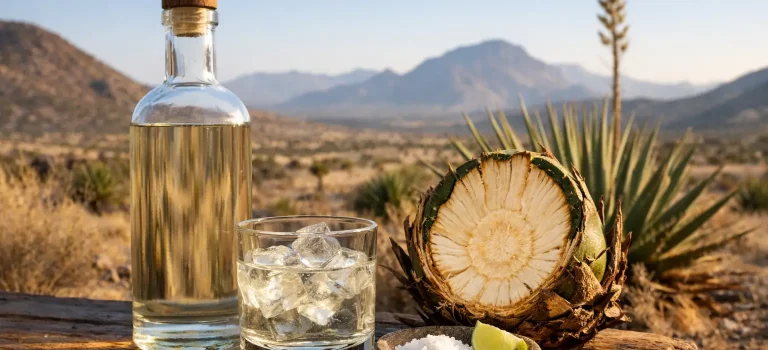
Mezcal is made from agave. Sotol is not. Sotol comes from Dasylirion, often called the desert spoon, a desert plant that grows in northern Mexico and the southwestern United States. Agave and sotol plants share a certain visual drama in the landscape, which is why people often assume they are the same family, but botanically they are different.

That single fact shapes everything that follows. Agave stores sugars in a large piña, the heart of the plant that is harvested for mezcal. Sotol producers also harvest the core of the plant, but the raw material behaves differently in cooking, fermentation, and distillation. If you are trying to understand why sotol can show more green, earthy, peppery, and dry notes while mezcal often leans smoky, fruity, floral, or roasted, start with the plant itself.

It also helps explain why sotol should not be described as just another mezcal. They are separate categories with their own history, geography, and sensory identity.

Region matters as much as the recipe

Mezcal is produced in several regions of Mexico, with Oaxaca being the most internationally recognized. Depending on where it is made, mezcal can express very different styles. A mezcal from Oaxaca may show tropical fruit, smoke, and sweetness, while expressions from other states can bring sharper mineral or herbal edges.

Sotol is deeply tied to northern Mexico, especially Chihuahua, Durango, and Coahuila. The climate is drier, the vegetation changes, and the cultural context changes with it. This is not a small detail. Spirits carry place, and sotol often tastes like the desert in the best possible sense – aromatic brush, dry earth after heat, fresh herbs crushed between the fingers, black pepper, and a clean, almost wind-swept finish.

That regional identity is part of what makes sotol so compelling for curious drinkers. It offers a different map of Mexico, one less familiar to many visitors but every bit as rich.

How production shapes flavor

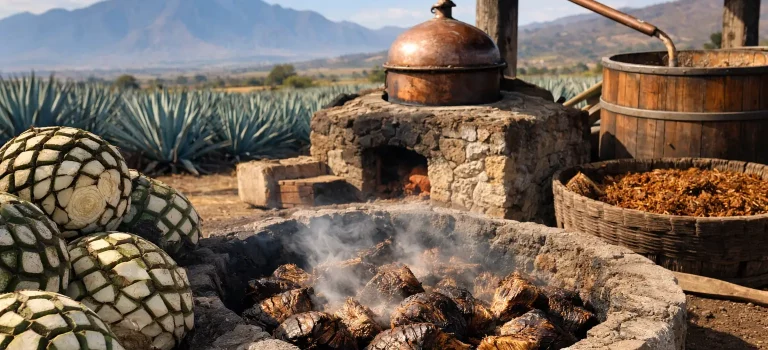
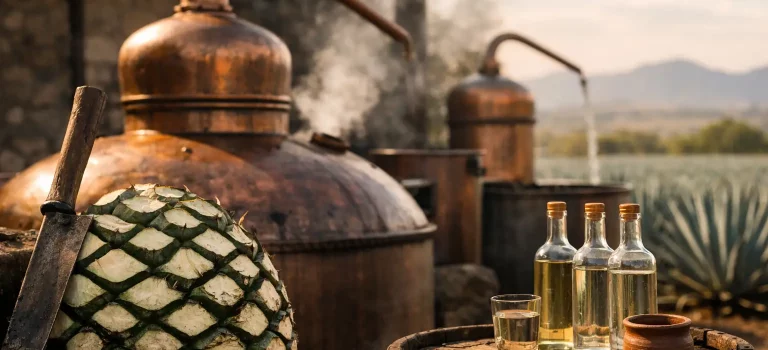
Both mezcal and sotol are typically made through artisanal methods, but details vary by producer. In mezcal, the agave hearts are often roasted in earthen pits, which is one reason smoky notes can appear so prominently. Then they are crushed, fermented, and distilled, sometimes in clay, sometimes in copper, sometimes in hybrid systems depending on regional practice and producer philosophy.

Sotol can also be cooked, crushed, fermented, and distilled with traditional methods, but the flavor result is usually different even when the production steps sound similar on paper. Many sotols show less smoke than mezcal, though smoke can still appear depending on the producer. More often, sotol opens with vegetal brightness, desert herbs, white pepper, wet stone, and a dry structure that feels very precise on the palate.

This is where tasting beats assumption. Two spirits can share artisanal production and still speak very differently in the glass. One reason guided tastings are so useful is that they help separate what comes from process and what comes from raw material and terroir.

Is sotol always smoother than mezcal?

Not necessarily. Smoothness is one of those words that gets used too loosely in spirits. Some sotols feel very clean and polished, especially if they carry a crisp herbal profile with restrained smoke. But mezcal can also be beautifully rounded and silky, particularly when made with care from mature agaves and well-managed fermentation.

A better question is what kind of texture and finish you prefer. Sotol often feels leaner, drier, and more savory. Mezcal can feel broader, richer, and more layered with roasted notes. Neither is automatically better. It depends on your palate and the bottle in front of you.

Flavor is where the sotol vs mezcal difference becomes obvious

If you are tasting blind, mezcal often announces itself with roasted agave, smoke, citrus peel, tropical fruit, floral tones, or sweet spice. Sotol often arrives with green herbs, desert brush, fresh cut grass, white pepper, minerals, and an earthy dryness that can feel almost alpine despite its desert origin.

That said, there is overlap. Some mezcals are intensely herbal. Some sotols carry smoke or fruit. Artisan spirits resist neat stereotypes because so much depends on species, soil, altitude, water, fermentation, still type, and the hand of the producer.

Still, for a first-time taster, this is a useful shorthand: mezcal tends to be more roasted and expressive in a lush way, while sotol tends to be more herbal and structured in a dry way. If mezcal is warm campfire, ripe fruit, and cooked agave, sotol is sage, pepper, stone, and open desert air.

Cultural identity and category confusion

Part of the confusion around these spirits comes from the way mezcal has become a catch-all term in casual conversation. People often use mezcal to mean any Mexican spirit that feels artisanal, smoky, or rustic. That does a disservice to categories like sotol, raicilla, bacanora, and others that deserve to be understood on their own terms.

Sotol has a long history in northern Mexico and a cultural identity shaped by that region. Treating it as a mezcal variant misses what makes it distinctive. For travelers interested in authentic Mexican spirits, this distinction matters. It is not about being fussy. It is about honoring origin, tradition, and the communities that keep these categories alive.

Why some drinkers fall in love with sotol first

Mezcal is often the gateway because it is more widely known, but sotol can be the one that wins people over. If you usually enjoy savory spirits, dry martinis, grassy agricoles, herbal amari, or mineral-driven wines, sotol may feel instantly familiar in spirit if not in flavor.

It also performs beautifully at the table. Its herbal and peppery profile can pair especially well with grilled seafood, aged cheese, roasted vegetables, dark chocolate, and dishes with smoke or spice. Mezcal is also a strong pairing spirit, of course, but it tends to bring more overt roast and fruit. Sotol can be a touch more restrained and architectural.

Which one should you order?

If you are new to both, start with what usually attracts you in a spirit. If you love bold aroma, smoke, ripe fruit, and a rounder sense of sweetness, begin with mezcal. If you prefer dry, grassy, mineral, and savory profiles, sotol may be the more exciting first pour.

If you already know mezcal, sotol is a natural next step because it expands your understanding of Mexico’s distilling traditions beyond agave. And if you think you do not like mezcal because every version you tried felt too smoky, sotol is worth your attention. It may offer the complexity you want without the intensity that put you off.

The best way to decide, naturally, is side-by-side tasting. In a guided setting, the sotol vs mezcal difference becomes vivid very quickly. You notice the nose first, then the weight on the palate, then the finish. The conversation shifts from abstract category names to precise impressions: greener, drier, smokier, fruitier, more mineral, more peppery.

At Santos Destilados, this is exactly the kind of comparison that turns curiosity into real appreciation. With the right guidance, what seems like a niche distinction becomes one of the most memorable parts of tasting Mexican spirits well.

A good bottle always tells you where it comes from. Sotol and mezcal do that in different accents, and that is the pleasure of learning to taste them. The more carefully you listen, the more Mexico reveals itself – not as one spirit tradition, but as many.

What Is Pearling in Mezcal?

What Is Pearling in Mezcal?

You pour a small amount of mezcal into a jicara, give it a gentle swirl, and suddenly a ring of tiny pearls rises to the surface. They shimmer for a few seconds, then slowly fade. If you have ever wondered what is pearling in mezcal, you are looking at one of the most captivating visual cues in Mexican distilling tradition – and one of the most misunderstood.

Pearling is not a party trick. It is part chemistry, part craft, and part sensory ritual. In a proper tasting, those bubbles can tell you something about alcohol concentration, texture, and distillation style. But they are not a shortcut to quality, and they do not replace the deeper work of nosing, sipping, and understanding the spirit in your glass.

What is pearling in mezcal?

Pearling refers to the formation of small, persistent bubbles on the surface of mezcal after the liquid is poured or agitated. In Mexico, these bubbles are often called perlas, or pearls. Traditional producers and experienced tasters have long paid attention to how these pearls appear, how long they last, and what that behavior may suggest about the spirit.

The phenomenon is most commonly associated with mezcales bottled at relatively high proof, often close to still strength. When alcohol and water are present in certain proportions, surface tension and viscosity can create bubbles that hold their shape longer than they would in a lower-proof spirit. In practical terms, a mezcal with noticeable pearling often signals a spirit that has not been heavily diluted before bottling.

That is why pearling carries romance in the world of mezcal. It can hint at a more direct expression of the distillate, one that feels closer to how it came off the still. For many drinkers, that visual moment sets the tone for the entire tasting.

Why do the bubbles form?

At its core, pearling is a physical reaction. Alcohol and water interact differently at different strengths, and the resulting liquid can trap air in a way that creates small, stable bubbles. When the mezcal is poured from one vessel to another, shaken slightly, or swirled in a cup, those bubbles rise and gather on the surface.

Proof is a major factor, but it is not the only one. The shape of the vessel matters. A traditional jicara can encourage a different surface pattern than a wide wine glass. The pour height matters too. So does ambient temperature. Even the presence of congeners and naturally occurring compounds from fermentation and distillation can influence how the bubbles behave.

This is where nuance matters. Pearling is often discussed as if it were a simple sign of high alcohol, but mezcal is rarely that simple. Two spirits at similar proof can pearl differently because their structure, body, and production choices are different.

Pearling and proof – related, but not identical

One reason people ask what is pearling in mezcal is because they have heard that bubbles can reveal alcohol content. There is some truth there. In traditional settings, mezcaleros have used pearling as one clue when assessing proof, especially before lab equipment became common in many rural palenques.

A mezcal that pearls nicely often falls within a range where the alcohol and water balance favors bubble retention. Historically, this gave producers a practical, experience-based reference point. It was not a lab test, but it was a useful sign.

Still, it is best to think of pearling as an indicator, not a guarantee. A beautifully pearling mezcal is not automatically superior. A mezcal with softer or shorter-lived bubbles is not automatically inferior. Some excellent mezcales are proofed down for balance, approachability, or house style. Others are bottled at stronger proof and show dramatic pearling, but intensity alone does not equal elegance.

The best tasting approach is to let the pearls open the conversation, not finish it.

What pearling can suggest in the glass

When pearling appears, it often prepares you for a mezcal with weight and texture. High-proof mezcales can carry a denser mouthfeel, a broader aromatic lift, and a longer finish. That can translate into notes that feel more vivid – roasted agave, wet earth, citrus peel, herbs, smoke, mineral tones, tropical fruit, or savory spice, depending on the agave and production style.

Pearling may also hint at minimal intervention after distillation. Many enthusiasts appreciate it because it suggests the spirit remains close to its original character. For travelers and collectors seeking small-batch bottles, that visual cue can feel like a promise of authenticity.

But here too, context matters. Some mezcales are adjusted with care to reach a proof where aromas become more expressive and the palate feels more integrated. Lowering proof is not always a compromise. In some cases, it is what allows a spirit to show grace rather than force.

What is pearling in mezcal compared to other spirits?

Pearling is especially celebrated in mezcal because of the category’s strong ties to artisanal production and traditional tasting culture. You may see similar bubble behavior in other high-proof spirits, but mezcal gives it language, meaning, and ceremony.

That cultural layer is part of what makes the experience so memorable. In tequila, sotol, raicilla, bacanora, and other Mexican distillates, texture and proof matter deeply as well, but mezcal has made pearling one of the most recognizable visual signatures for curious drinkers.

This is also why a guided tasting is so valuable. Seeing the pearls is one thing. Understanding whether they reflect proof, vessel, style, or expectation is another. Once you taste several agave spirits side by side, the differences become far more vivid than any single myth about bubbles.

Common myths about pearling

The biggest myth is that more pearls always mean better mezcal. They do not. Pearling can be beautiful and informative, but quality lives in balance. A great mezcal should show clarity of aroma, precision on the palate, and a finish that invites another thoughtful sip.

Another common myth is that pearling proves a mezcal is handmade. It does not. Pearling can appear in spirits made under different conditions, and it should never be used as the only marker of artisanal integrity. Production methods, origin, agave type, fermentation, distillation, and the producer’s philosophy matter much more.

There is also a tendency to romanticize pearling as a mystical secret. The tradition deserves respect, but respect does not require exaggeration. Pearling is real, useful, and culturally meaningful. It is simply not magic.

How to observe pearling the right way

If you want to see pearling clearly, pour a small amount of mezcal into a tasting vessel and watch the surface immediately. A gentle swirl is enough. You are looking for fine bubbles that gather and linger rather than disappearing at once.

Do not judge too quickly. Notice bubble size, how evenly they form, and how long they hold. Then move on to aroma and taste. The visual is only the first chapter.

If possible, compare two or three mezcales with different proofs. This is where your palate starts connecting the dots. A spirit with lively pearling may also show more heat, more texture, or a more expansive aromatic profile. Another may show less visible pearling but deliver extraordinary finesse. That contrast teaches far more than chasing a single spectacle.

Why pearling matters to the mezcal experience

For many travelers discovering agave spirits in Los Cabos, pearling becomes the moment when mezcal stops feeling abstract and starts feeling alive. You are no longer reading a back label. You are watching the spirit reveal itself.

That sense of connection matters. Mezcal is not only about flavor. It is about process, place, and human touch. Pearling invites you to slow down and notice that what is in the glass has structure, energy, and a story rooted in technique.

In a thoughtful tasting, this is often where curiosity opens up. Guests begin asking better questions. Why does one mezcal pearl more than another? Why does one smell floral and lifted while another leans savory and wild? Why does proof feel integrated in one bottle and aggressive in another? Those are the questions that turn a casual sip into cultural discovery.

At Santos Destilados, that is exactly the kind of conversation worth having. Not because bubbles alone define greatness, but because they offer a memorable doorway into the deeper language of mezcal.

So the next time a ring of pearls appears in your cup, enjoy the beauty of it. Then do what the best mezcal always asks of you – pause, breathe in, sip slowly, and let the spirit tell you the rest.

How to Taste Tequila Properly

How to Taste Tequila Properly

Most people have been taught to drink tequila too fast to understand it. One quick shot, a wedge of lime, a hit of salt, and the entire point of the spirit disappears. If you want to learn how to taste tequila properly, the first shift is simple – stop treating it like a dare and start treating it like a crafted spirit with origin, texture, and a story in the glass.

A well-made tequila can show roasted agave, fresh herbs, citrus peel, pepper, earth, vanilla, butter, and even a clean mineral note depending on how it was produced and aged. The pleasure is not just in the finish. It begins with what you see, what you smell, and how the liquid moves before you ever swallow.

How to taste tequila properly starts before the first sip

Good tasting begins with the setting. A cold, noisy bar packed with strong food aromas is not ideal if your goal is to notice nuance. Tequila reveals itself best at room temperature or just slightly cool, not ice cold. Chilling mutes aroma, and aroma is where much of the experience lives.

Glassware matters more than most people expect. A narrow glass that concentrates aroma will help you detect more than a wide shot glass ever could. A tequila flute, a small wine glass, or a proper tasting glass works beautifully. The point is not ceremony for its own sake. The point is focus.

Pour a modest amount, enough to swirl gently without flooding the bowl of the glass. Give it a moment to settle. If the tequila has been poured straight from a busy shelf or brought from a very warm room, a short pause helps it open naturally.

If you are tasting more than one tequila, start with the lightest and least aged expression. Blancos first, then reposados, then añejos, then extra añejos if available. That order protects your palate. Starting with oak-heavy spirits can bury the brighter agave notes in everything that follows.

Look first, because texture leaves clues

Before you smell or sip, hold the glass up to the light. Color can tell you something, but not everything. A blanco is usually clear, though some may show the faintest silver cast. Reposados range from pale straw to soft gold. Añejos and extra añejos deepen into amber tones. Still, color alone should never be mistaken for quality. A darker tequila is not automatically better. It is simply older or more influenced by wood.

Swirl the glass gently and watch the legs, the droplets that slide down the inside. Slow, thick legs can suggest body and alcohol weight, though they are not a perfect scorecard. What you are really doing is preparing your eye for texture. Tequila should look alive, not dull.

Some experienced tasters also notice the bead or pearling when the spirit is moved or poured. Fine bubbles can hint at texture and alcohol integration. It is one more detail, not a verdict. In tasting, context always matters more than one visual cue.

Smell in stages, not all at once

The nose is where tequila begins to speak clearly. But many people rush this part and overwhelm themselves with alcohol vapor. Instead of putting your nose deep into the glass immediately, start a little above the rim. Take a light sniff with your mouth slightly open. This softens the sting of alcohol and lets subtler aromas come forward.

Then move around the glass. Different spots can reveal different notes. You may find bright citrus and green agave on one side, black pepper or mint on another, and deeper vanilla or caramel where oak has had more influence.

A blanco often brings the purest expression of agave. You might notice cooked agave, fresh-cut grass, olive, lime zest, white pepper, or a saline edge. A reposado may still show agave clearly, but with soft additions from the barrel such as honey, baking spice, or toasted almond. An añejo can move further into dried fruit, cocoa, butterscotch, tobacco, and warm wood. The key is balance. If the oak erases the agave entirely, the tequila may be polished but less distinctive.

Take your time here. Aroma often changes after a minute or two in the glass. A tequila that feels quiet at first can open beautifully with air.

The first sip should be small

When people ask how to taste tequila properly, they often expect a rule about swallowing. The better rule is about pacing. Your first sip should be small, just enough to coat the mouth. Let it move across your tongue before you swallow.

Notice the arrival. Is it crisp, creamy, oily, lean, peppery, sweet, vegetal, or mineral? Good tequila does not need to be harsh to be expressive. Alcohol presence is normal, especially in higher-proof bottles, but it should feel integrated rather than jagged.

On the mid-palate, the tequila should develop rather than collapse. This is where craftsmanship becomes obvious. A thoughtfully made tequila can move from cooked agave to citrus and pepper, then into herbs, spice, or a gentle barrel note. Lesser spirits often flatten quickly into alcohol and sweetness.

After swallowing, wait for the finish. A fine tequila lingers. Maybe it leaves a trace of cinnamon, black pepper, roasted agave, or soft oak. Maybe the finish is dry and earthy, or silky and warming. Length matters, but so does clarity. A long finish is only impressive if it remains pleasant.

Take a second sip after your palate adjusts. The first often introduces structure. The second reveals character.

What flavors should you actually expect?

Tequila tasting becomes more enjoyable when you know what belongs in the category. Agave is the anchor. That can show up as sweet cooked agave, green agave freshness, or a richer roasted note depending on production. From there, expect supporting flavors rather than random ones.

Citrus, pepper, herbs, minerality, olive, and floral notes are common in blancos. Reposados can add vanilla, honey, gentle toast, or light spice from barrel rest. Añejos can lean toward caramel, cacao, dried fruit, or polished wood. But tequila is not supposed to taste like dessert alone. Even aged expressions should carry the identity of blue agave.

This is also where production style matters. Brick ovens, autoclaves, tahona crushing, roller mills, stainless steel fermentation, wild yeast, copper stills, barrel type, and aging length all shape the final profile. There is no single correct flavor map. There is only the question of whether the tequila tastes honest, balanced, and true to its method.

How to taste tequila properly without overwhelming your palate

A proper tasting is not a contest of endurance. Water is essential, both for hydration and for resetting your palate between pours. Plain crackers can help, though strong snacks will interfere. Rich food, spicy salsa, coffee, mint, and perfume can all distort your perception.

If you are tasting several expressions, pour small amounts and revisit them. Comparative tasting teaches faster than isolated sipping. A blanco next to a reposado makes barrel influence obvious. Two blancos from different producers can show just how wide the category really is.

And yes, it depends on the moment. If you are enjoying tequila with a meal, strict tasting discipline matters less than pleasure. But if your goal is to learn, less distraction gives you more reward.

Common mistakes that flatten the experience

The biggest mistake is shooting premium tequila. The second is assuming smoothness is the only sign of quality. Some consumers chase the softest, sweetest sip possible, but tequila should still have structure and presence. If it tastes like vanilla syrup with no agave backbone, something is missing.

Another common error is relying on lime and salt as default companions. They have their place in casual drinking, but they cover the flavors you are trying to notice. The same goes for ice. A single large cube can be pleasant in an aged tequila, but if you are evaluating aroma and nuance, neat is the clearest route.

Finally, people often judge too quickly. A tequila can seem sharp on the first nosing and then turn elegant with air. Another can smell charming but finish thin. Give the spirit enough time to tell the truth.

Why guided tasting changes everything

This is where experience becomes richer than information. You can read tasting notes, memorize categories, and still miss what is in front of you without a little guidance. In a curated tasting, you learn not just what you like, but why. You begin to connect aroma to production, texture to distillation, and finish to aging.

That is why travelers looking for something more meaningful than a tourist pour often gravitate toward intimate tasting rooms like Santos Destilados, where tequila is presented as part of a larger Mexican tradition of craft, region, and hospitality. A well-led tasting does not make the spirit more complicated. It makes it more legible.

Tequila rewards attention. Slow down, use the right glass, trust your senses, and let agave lead the conversation. The more carefully you taste, the more generously the spirit gives back.

Mezcal and Chocolate Pairing That Works

Mezcal and Chocolate Pairing That Works

The first surprise in a great mezcal and chocolate pairing is that bigger flavor does not always mean a better match. A deeply smoky mezcal can flatten a delicate chocolate. A bold, bitter cacao can make a graceful espadín feel thin. When the pairing works, though, something beautiful happens – smoke turns silky, fruit notes brighten, minerality lingers longer, and the whole experience feels unmistakably Mexican.

That is why this pairing deserves more than a quick pour beside a dessert plate. Mezcal and chocolate both carry origin in a vivid way. Agave variety, roast, fermentation, still type, cacao percentage, roast level, sugar, and texture all shape what lands on the palate. Treat them with a little attention, and the pairing becomes less about sweetness and more about conversation between two artisanal traditions.

Why mezcal and chocolate pairing feels so natural

At first glance, mezcal and chocolate pairing seems obvious because both can be intense, earthy, and luxurious. But the deeper reason is structure. Mezcal often brings smoke, herbs, citrus peel, green notes, wet stone, tropical fruit, and sometimes a savory or saline edge. Chocolate can bring bitterness, creaminess, roasted nuts, dried fruit, spice, coffee, and floral notes depending on cacao origin and style.

Those elements can either echo each other or create contrast. A mezcal with bright acidity and light smoke can lift a dark chocolate with red fruit notes. A rounder expression with cocoa and roasted agave tones can settle beautifully into chocolate that leans nutty or cinnamon-spiced. The point is not to make everything taste heavier. The point is to build balance.

This is also where many people get mezcal wrong. They assume smoke is the dominant feature and choose chocolate based only on intensity. Smoke matters, but it is only one layer. Some mezcals are floral and mineral. Others are green and peppery. Others carry ripe fruit, leather, or a gentle lactic softness. If you pair only for smoke, you miss the personality of the spirit.

Start with the mezcal, not the dessert

If you want a smarter mezcal and chocolate pairing, begin by tasting the mezcal on its own. Take a small sip and notice what shows up after the initial alcohol settles. Is it citrusy or savory? Dry or creamy? Does the finish feel ashy, herbal, sweet, or saline?

That profile should guide the chocolate. A bright, lively mezcal usually prefers chocolate with clarity rather than excess sugar or heavy fillings. A richer, more robust mezcal can handle darker cacao percentages and more roasted depth. The pairing should feel like each side gains detail, not like one side overwhelms the other.

Texture matters almost as much as flavor. Chocolate that melts slowly can soften a spirit with sharper edges. Crisp, snappy chocolate can sharpen a mezcal that feels round and plush. Even a small square changes how the next sip lands, which is why pacing matters. Sip, taste, wait, sip again. The second sip often tells the real story.

How cacao percentage changes the experience

One of the easiest mistakes is assuming higher cacao is automatically more refined. In pairings, that is not always true. A 70 to 75 percent dark chocolate often gives you the best range – enough bitterness and depth to stand beside mezcal, but usually enough sweetness to keep the spirit expressive.

Move lower, into milk chocolate or very sweet dark chocolate, and the sugar can blur the mezcal’s structure. Some softer, fruit-forward mezcals can still work here, especially when the chocolate includes caramel or toasted nuts, but many artisanal bottlings lose their nuance.

Move higher, above 80 percent, and the bitterness becomes a serious factor. This can be stunning with mezcals that have strong mineral, roasted, or earthy notes. It can also become austere if the spirit is elegant and lightly smoky. That is the trade-off. Higher cacao can create drama, but it leaves less room for subtlety.

Flavored chocolate adds another variable. Cinnamon, sea salt, chile, orange peel, or coffee can create memorable combinations, but they also steer the tasting. Sometimes that is exactly what you want. Other times those additions cover the mezcal’s more delicate notes. For first-time exploration, plain chocolate from a good maker is usually the clearest teacher.

The pairings that usually work best

Espadín is often the best place to start because it can show a broad range of styles while remaining approachable. A balanced espadín with gentle smoke, citrus, and roasted agave tends to pair well with dark chocolate in the 70 percent range. If the chocolate has notes of almond, raisin, or light spice, the match often feels complete without becoming too heavy.

If the mezcal leans floral or herbal, look for chocolate with red fruit, berry, or subtle vanilla tones. That combination keeps the pairing lifted. If the mezcal is more savory and earthy, choose a darker, less sweet chocolate with deeper roast and a firmer bitter finish.

Wild agave mezcals can be thrilling with chocolate, but they require more care. Expressions with pronounced minerality, salinity, or green intensity can clash with overly sweet or creamy chocolate. In those cases, a lean, well-made dark chocolate lets the spirit stay precise. Rich truffles or heavily flavored bars may feel luxurious on their own, yet too busy in the glass.

There are also pairings built on contrast rather than similarity. A mezcal with fresh tropical fruit notes can wake up a chocolate that leans toasted and bitter. A smoke-forward pour can become surprisingly elegant next to chocolate with orange peel or a touch of chile. The key is proportion. A tiny piece of chocolate is often enough. Too much, and the palate turns muddy.

What to taste for in the moment

A strong pairing changes over three stages. First, taste the chocolate by itself and notice whether it reads fruity, nutty, spicy, earthy, or creamy. Then sip the mezcal and let it coat the palate. Finally, return to the chocolate or take another sip after it melts.

What you want is movement. Maybe the chocolate brings out stone fruit in the mezcal. Maybe the mezcal makes the cacao seem softer and longer on the finish. Maybe a little saline note appears that you did not notice before. Those shifts are the reward.

What you do not want is collapse. If the mezcal suddenly tastes hot and simple, the chocolate is too dominant. If the chocolate turns chalky, sour, or flat, the spirit is likely too aggressive for it. When that happens, adjust one variable at a time – lower cacao, less sweetness, or a different mezcal style.

Temperature helps more than most people realize. Mezcal served too cold loses aromatic complexity, and chocolate served too warm can feel greasy and mute. Room temperature is your friend here. Give both enough space to speak clearly.

Why this pairing says something about Mexico

A thoughtful mezcal and chocolate pairing is not just a luxury gesture. It expresses two ingredients that hold deep cultural weight, each shaped by land, craft, and regional knowledge. Mezcal carries the labor of agave maturity, roasting, fermentation, and distillation. Chocolate carries the work of cacao cultivation, fermentation, roasting, and grinding. Both reward patience. Both reveal origin.

That is what makes the experience so memorable for travelers who want more than a generic tasting. When the pairing is curated with care, you are not simply sampling a spirit with a sweet bite on the side. You are tasting how smoke, fruit, bitterness, spice, and texture can reflect a broader Mexican table – refined, generous, and full of identity.

In a setting built around small-batch bottles, guided tasting, and artisanal accompaniments, the pairing becomes even more vivid. At Santos Destilados, chocolate is not there to decorate the pour. It is there to sharpen perception, deepen pleasure, and turn a glass of mezcal into a fuller encounter with Mexican craft.

If you are curious where to begin, start modestly: one well-made mezcal, one serious dark chocolate, and enough time for a second sip. That is usually when the pairing opens up and starts telling the truth.

Where to Find Rare Mezcal Bottles Cabo

Where to Find Rare Mezcal Bottles Cabo

A great mezcal bottle should stop you before the first sip. Maybe it is the village named on the label, the agave variety you have never seen in a U.S. liquor store, or the quiet fact that only a few hundred bottles were made. For travelers searching for rare mezcal bottles Cabo offers more than souvenir shelves and flashy bars. It offers a chance to taste Mexico with context, precision, and a little wonder.

That difference matters. Mezcal can be rustic, elegant, mineral, floral, smoky, savory, and wildly expressive depending on agave, region, water, fermentation, distillation, and the hand of the producer. When you are in Cabo, the question is not simply where to buy a bottle. It is how to recognize one worth bringing home.

What makes a mezcal bottle truly rare

Rarity in mezcal is not a marketing adjective. In the best cases, it comes from production realities that cannot be scaled without changing the spirit itself. Some mezcals come from wild agaves that take many years to mature. Others are made from agaves cultivated in very small quantities, or from micro-lots produced by a single family palenque using traditional methods that naturally limit output.

A rare bottle might feature Tepeztate, Tobala, Arroqueno, Cuishe, or another agave with a distinct growing cycle and flavor profile. It may come from a remote community in Oaxaca, Guerrero, Durango, Puebla, or another mezcal-producing region where each producer works with local conditions rather than trying to standardize the spirit for mass appeal. Sometimes rarity comes from process. Clay pot distillation, wooden fermentation vats, spring water, or ancestral methods can create extraordinary character, but also tiny yields.

That said, rare does not always mean better for every palate. Some highly allocated mezcals are intense, herbal, earthy, or sharply mineral. If you usually enjoy a softer, rounder pour, a more accessible expression may give you more pleasure than the bottle everyone is chasing. This is where guided tasting becomes far more useful than label shopping.

Rare mezcal bottles Cabo shoppers should look for

If you are browsing with serious interest, start by reading beyond the front label. Look for the producer’s name, not just the brand. In mezcal, the mezcalero matters. The village matters too, because place leaves a fingerprint on the spirit in ways even experienced drinkers notice once they taste side by side.

Batch information is another good sign. Bottle counts, lot numbers, agave species, elevation, and production details often signal transparency rather than theater. A bottle that tells you who made it, where, from what agave, and how it was distilled is usually offering a more honest invitation than one that relies only on dramatic packaging.

Ask whether the bottle is part of a small release or a recurring label. Both can be excellent, but they serve different buyers. A recurring expression can become a reliable favorite. A one-off lot can feel like a snapshot of a season, a village, and a producer’s choices at a particular moment. For collectors, that is part of the appeal. For first-time buyers, it can be thrilling, but it helps to taste before committing.

Why tasting first changes everything

Buying rare spirits on reputation alone is risky, especially with mezcal. Flavor descriptions can only go so far. One person’s «light smoke and tropical fruit» may read as bright and layered to you, or it may land as too lean, too green, or too wild. The beauty of mezcal is that it resists generic taste profiles.

A proper tasting lets you compare categories and calibrate your palate. You may think you want the smokiest bottle in the room, then discover you are drawn to a floral Tobala or a savory, structured Arroqueno. You may arrive focused only on mezcal and leave fascinated by the contrast with sotol, raicilla, bacanora, or pox. That broader context often makes a rare mezcal easier to appreciate because you can place it within Mexico’s wider distilling traditions.

There is also the matter of texture and proof. A bottle can be high-proof and still feel graceful. Another can be lower-proof and seem heavier than expected. In guided tastings, details like pearling, mouthfeel, finish, and distillation style stop being abstract terms and become part of what you actually experience in the glass.

How to avoid tourist-trap mezcal in Cabo

Cabo has no shortage of places willing to sell «premium» spirits. Not all of them offer real curation. If every bottle looks expensive but no one can explain the producer, agave, region, or process, you are probably looking at pricing without depth.

A better shop or tasting room will welcome questions. They should be able to explain why one bottle costs more than another without falling back on vague luxury language. They should talk about harvest age, wild versus cultivated agave, fermentation, still type, and batch size. They should also be honest when a bottle is unusual but not necessarily the best fit for your taste.

The strongest experiences in Cabo tend to feel intimate rather than performative. You want guidance from someone who treats mezcal as living culture, not as a dare, a costume, or a smoke contest. That is especially true if you are buying a bottle to take home as a gift or for a serious collection. A memorable purchase starts with trust.

The value of a curated mezcal experience

For many travelers, the best route to rare mezcal bottles Cabo has to offer is not wandering from shop to shop. It is sitting down for a curated tasting where the conversation is as rewarding as the pour. In a premium setting, you can taste small-batch expressions, compare agaves, and understand why two bottles that look similar on a shelf can drink like entirely different spirits.

This is where Santos Destilados stands apart. In the heart of Cabo, the experience goes well beyond a retail transaction. Guests can explore guided tastings with expert context, discover small-production bottles that are difficult to encounter in ordinary tourist retail, and pair those pours with thoughtful local accompaniments, including artisanal chocolate. The atmosphere is intimate, polished, and deeply rooted in Mexican spirits culture without losing the warmth of true hospitality.

For visitors from the U.S., that combination is especially valuable. You are not expected to arrive as an expert. You are invited to become a more confident drinker and buyer in one sitting. Whether you want a serious collector’s bottle, a meaningful gift, or simply a mezcal that will remind you of your time in Cabo long after the trip ends, education makes the purchase feel personal rather than impulsive.

Choosing the right bottle to bring home

The right bottle depends on who it is for and how you plan to enjoy it. If you are buying for your own bar, consider whether you want a conversation piece, a contemplative sipping bottle, or something rare but versatile enough to share with friends who are newer to mezcal. Those are not always the same bottle.

If it is a gift, think about the recipient’s habits. A whiskey lover may appreciate a mezcal with deeper savory notes and structural weight. A tequila collector may gravitate toward brighter agave definition and cleaner, more linear finishes. Someone who loves food and wine might respond to aromatic complexity over raw intensity.

Budget matters too, and there is no shame in that. Some rare bottles are genuinely expensive because they should be. Others are priced high because they are in a tourist market. A tasting room with integrity will help you understand the difference. Often, the smartest purchase is not the highest-priced bottle in the case but the one with the clearest story, strongest craftsmanship, and best match for your palate.

Travel logistics are worth considering before you buy. Ask about bottle size, packaging, and what makes the most sense for transporting spirits home. A beautiful purchase loses a bit of its romance if it becomes a stressful airport problem.

A bottle with a sense of place

The finest mezcal purchases carry more than scarcity. They carry memory. You remember the aroma before the sip, the explanation of the agave’s years in the ground, the producer’s method, the way the spirit opened slowly in the glass. In Cabo, that is the real pleasure of seeking out rare mezcal. Not just finding something hard to get, but finding something worth understanding.

If you are going to make room in your suitcase for one exceptional bottle, make it one that tells the truth about where it came from. The best rare mezcal is not trying to impress from across the room. It earns its place the moment you taste it, and stays with you long after the bottle is gone.

Why Small Batch Mezcal Brands Stand Out

Why Small Batch Mezcal Brands Stand Out

One sip can tell you when a mezcal was made with patience instead of scale. That is the real appeal of small batch mezcal brands. They often carry the imprint of a single palenque, a family method, a specific harvest, even the season itself. For travelers and spirits lovers who want more than a souvenir bottle, that difference is not marketing language. It is flavor, texture, and story in the glass.

In a destination like Cabo, where polished hospitality meets curiosity about Mexican culture, mezcal becomes much more interesting when you move past the familiar labels. The best bottles are not always the loudest ones. Often, they come from producers working in limited volumes, honoring regional techniques, and accepting a truth that mass brands try to smooth over – great mezcal is not supposed to taste identical every time.

What small batch mezcal brands really mean

Small batch sounds premium, but the phrase can be used loosely. In mezcal, it should point to something specific: limited production shaped by artisanal methods and agricultural reality. Agave takes years to mature. Harvests vary. Fermentation responds to climate, ambient yeast, water, and timing. Distillation is guided by a mezcalero’s decisions, not just a factory setting.

That means a small batch is usually smaller for real reasons, not because scarcity was invented for a label. A producer may cook a certain amount of agave in an earthen pit, mill it by tahona or mule, ferment in wood vats, and distill in copper or clay stills. The resulting lot can be wonderfully expressive, but it may never be repeated in exactly the same way.

This is where the category gets exciting. Consistency still matters, but in mezcal, variation is part of the point. One batch may show roasted pineapple and white pepper. Another from the same producer may lean greener, more mineral, or more floral. When handled with skill, those shifts are not flaws. They are signs of life.

Why small batch mezcal brands taste different

The short answer is that mezcal begins in the field, not in the bottle. Espadin may be the most common agave used for mezcal, but even espadin can taste dramatically different depending on altitude, soil, water access, and the producer’s hand. Add wild or semi-wild agaves like tobalá, cuishe, madrecuixe, tepeztate, or arroqueño, and the range expands even further.

Production choices matter just as much. Earthen pit roasting brings smoke, but not all smoke is the same. Some mezcals are savory and earthy, others bright and citrusy with only a gentle campfire note. Fermentation can bring tropical fruit, olive brine, yogurt tang, or delicate herbal tones. Distillation can sharpen structure or add weight and creaminess.

Small batch mezcal brands tend to preserve these distinctions instead of blending them away. Large-scale production often aims for broad familiarity. Small lots can afford to be more honest. That honesty is what draws collectors, bartenders, and curious drinkers who want to taste place, process, and personality.

The trade-off behind the romance

There is a reason small batch mezcal commands attention, and often a higher price. These bottles are labor intensive, limited in quantity, and sometimes hard to source. You are paying for long agave maturation, manual work, lower yields, and a supply chain that may be far less industrial.

Still, higher price does not automatically mean better mezcal. Some brands package tradition beautifully but offer liquid that feels ordinary for the cost. Others are exceptional but require a little guidance to appreciate fully. A clay-distilled mezcal with a strong mineral edge can be unforgettable for one drinker and challenging for another.

That is why context matters. The right bottle depends on whether you want an elegant entry point, a food-friendly pour, a smoky conversation piece, or a rare expression from a specific agave. The smartest way to buy is not to chase rarity for its own sake. It is to understand style, region, and producer.

How to evaluate small batch mezcal brands with confidence

Start with who made it. A serious mezcal label should tell you more than a brand name. Look for the producer or mezcalero, the state or town of origin, the agave variety, alcohol by volume, and ideally lot information. These details are not decoration. They are your map.

Then pay attention to transparency. If a brand talks broadly about authenticity but says little about process, region, or production scale, pause there. The best mezcal brands are usually proud to tell you how the spirit was roasted, fermented, and distilled, because that is where the character comes from.

Tasting is even more revealing. A well-made small batch mezcal should feel integrated. Smoke may be present, but it should not flatten everything else. You want aroma first, then layers: fruit, herbs, earth, flowers, spice, salinity, or minerality. The finish should linger with purpose, not just heat.

Pearling can offer another clue when mezcal is poured with a little height into a jicara or copita. Those small bubbles are often associated with body and alcohol structure, though they are not a standalone quality test. They are part of the ritual and part of the reading, not the whole story.

Small batch mezcal brands and the value of guided tasting

Buying mezcal cold from a shelf can work if you already know your preferences. But for many travelers, the category opens up much faster in a guided tasting. Side-by-side pours reveal things a label cannot. You notice how one espadin leans green and citrusy while another turns deeply roasted and savory. You learn that smoke is only one accent, not the entire language.

This is especially useful if you are visiting Mexico and want to avoid generic tourist tastings that reduce mezcal to shock value. A thoughtful tasting should explain production methods, regions, agave families, and why two bottles with similar labels may drink very differently. Add a pairing with chocolate or local bites, and the spirit becomes even more vivid.

For guests in Cabo, that kind of curation can turn an impulse tasting into a memorable cultural experience. At Santos Destilados, for example, the conversation around mezcal includes not only flavor but process, provenance, and the pleasure of discovering bottles you may never encounter again back home.

What styles are worth seeking out

If you are new to the category, begin with a balanced espadin from a transparent producer. It can show smoke, fruit, and herbs without overwhelming the palate. If you already enjoy peated whisky, agricole rhum, or funky rum, you may be ready for bolder expressions with more earth, brine, or fermentation-driven character.

If rarity attracts you, proceed with care. Wild agaves can produce stunning mezcal, but they are not automatically superior. Some are highly aromatic and graceful. Others are dense, vegetal, or intensely dry. The right choice depends on what you actually enjoy drinking, not what sounds most exclusive.

Also consider occasion. A bright, lifted mezcal may be perfect before dinner. A richer, more structured pour can handle dessert or dark chocolate beautifully. Some bottles belong in slow conversation with a copita. Others can transform a serious cocktail without disappearing into it.

The best bottles carry a sense of place

What makes mezcal so compelling is that it resists flattening. Good tequila can be precise and elegant, but mezcal often feels more rugged in the best sense – more tied to geography, weather, fuel source, fermentation vessel, and local custom. Small batch production protects that identity.

That does not mean every artisanal mezcal is rustic or rough. Some are polished, floral, and almost quiet at first. Others arrive with dramatic smoke and wild herbs. The beauty is that both can be authentic. The category rewards attention.

For collectors, that means bottles become markers of time and place. For travelers, it means the mezcal you taste in Mexico may be inseparable from the memory of where you had it: warm evening air, good conversation, a thoughtful pour, and someone explaining why this lot tastes slightly different from the last one. That is not inconsistency. That is the point.

Small batch mezcal brands matter because they preserve complexity in a world that often prefers simplification. If you give them a little patience, they give back much more than smoke – they offer a richer way to taste Mexico, one carefully made pour at a time.

Best 100 Blue Agave Tequila for Margaritas

Best 100 Blue Agave Tequila for Margaritas

Order a margarita in a beach town and you can learn a lot from the first sip. If it tastes bright, clean, and alive, the tequila is doing its job. If it tastes flat, sugary, or oddly hot, the base spirit was probably an afterthought. That is why choosing the best 100 blue agave tequila for margaritas matters more than many drinkers realize.

A great margarita is not built on mystery spirits or shortcuts. It begins with tequila made from 100% blue agave, which means the fermentable sugars come entirely from agave rather than a blend with cane or other sources. That one detail changes the whole cocktail. You get clearer agave character, better texture, and a finish that still tastes like tequila instead of disappearing under lime and orange liqueur.

What makes the best 100 blue agave tequila for margaritas?

The answer is not simply price, prestige, or the fanciest bottle on the back bar. For margaritas, the best tequila is the one that keeps its identity when shaken with citrus, sweetener, and dilution. You want freshness, pepper, minerality, and a natural agave sweetness that lifts the drink rather than making it heavy.

Blanco is usually the first place to look. Because it is either unaged or only lightly rested, blanco tequila shows the clearest expression of agave. In a margarita, that often translates to a more vibrant and energetic cocktail. Think green herbs, citrus peel, cracked pepper, wet stone, and roasted agave. Those notes meet lime beautifully.

Reposado can work too, but it depends on the style. A lightly aged reposado with restrained oak can create a rounder, slightly silkier margarita. You may notice hints of vanilla, baking spice, or honey. That can be lovely in a Cadillac-style build or a fall-leaning margarita variation. But if the barrel influence is too strong, the drink starts losing its snap.

Anejo is rarely the best choice for a classic margarita. It is not that anejo tequila lacks quality. Quite the opposite. It is often too layered, too oak-driven, and too expensive for what the cocktail asks it to do. When the goal is brightness, aged richness can feel like wearing a velvet jacket to a pool party.

Why 100% blue agave matters in the glass

For many travelers and casual tequila drinkers, the phrase sounds technical. In practice, it is very simple. Tequila labeled 100% blue agave is generally more expressive, more honest about its raw material, and more satisfying in cocktails where the spirit still needs to speak.

Mixto tequila, by contrast, can legally include other sugar sources. That does not guarantee a bad drink, but it often leads to a thinner profile and a less distinctive agave presence. In frozen or heavily sweetened margaritas, some bars hide that difference. In a well-made margarita, you can taste it immediately.

If you care about quality, cultural integrity, and flavor, 100% blue agave is the baseline. Not the luxury upgrade. The baseline.

Blanco or reposado for margaritas?

This is the question we hear most often in tasting rooms, and the honest answer is that it depends on the margarita you want.

If you love a crisp, classic, citrus-first margarita, choose blanco. It gives the drink lift and precision. The lime tastes brighter, the salt pops more clearly, and the agave notes arrive with confidence. Blanco is especially strong in a traditional build with fresh lime juice, orange liqueur, and little to no added syrup.

If you prefer a softer, rounder style, a clean reposado can be beautiful. It adds weight and a gentle warmth that some guests find more luxurious. This works especially well when the cocktail includes orange-forward liqueur, a touch of agave nectar, or even a subtle spice element like tajin or chili salt.

What you want to avoid is assuming reposado is automatically better because it is aged. In cocktails, more age is not always more pleasure. Sometimes the freshest spirit makes the most complete margarita.

How to spot a tequila that will shine in a margarita

A bottle can be excellent for sipping and still not be ideal for mixing. For margaritas, look for tequila with a clear agave nose, balanced alcohol, and a finish that stays clean instead of syrupy or overly woody.

When you taste it neat, ask a few simple questions. Do you get cooked agave first, or is it buried under vanilla and oak? Does the tequila feel naturally textured, or does it seem manipulated and overly sweet? Does the finish invite another sip, or does it end in harsh heat?

The best mixing tequilas usually have enough structure to stand up to lime but enough elegance not to fight the cocktail. That balance is where the magic lives.

Flavor profiles that work especially well

Herbal and peppery tequilas make razor-sharp classic margaritas. Mineral-driven tequilas feel especially refreshing and dry. Tequilas with gentle citrus and floral notes pair beautifully with premium orange liqueur. If the tequila leans too sweet on its own, the cocktail can quickly become broad and sticky.

Proof matters as well. A slightly higher-proof tequila can hold up better after shaking and dilution, but only if the alcohol is integrated. Heat without balance does not make a stronger margarita. It just makes a rougher one.

What to avoid when choosing a margarita tequila

The most common mistake is chasing smoothness at all costs. In tequila, “smooth” can sometimes be code for flattened character, heavy filtration, or added sweetness that masks the agave. That style may appeal in a quick sample, but in a margarita it often leaves the drink vague and overly polished.

Another mistake is paying for prestige when what you really need is character. A rare extra-aged bottle may be extraordinary on its own, yet wasted in a shaken sour. Margaritas reward clarity more than status.

And then there is the mixer trap. Even the best 100 blue agave tequila for margaritas will struggle if paired with bottled lime mix full of corn syrup and artificial flavor. Fresh lime is not optional if you want the tequila to show its true shape.

A better way to judge tequila before you buy

If you are standing in a specialty shop or tasting room, trust your palate more than the marketing language. Ask to compare two blancos side by side, or a blanco and a lightly aged reposado. Notice which one still feels vivid after a second sip. Notice which one makes you imagine lime and salt immediately.

This is where guided tasting becomes valuable. Once you understand how roasting, fermentation, distillation, and resting affect aroma and texture, choosing tequila for cocktails gets much easier. You stop shopping by label design and start shopping by style.

At a curated space like Santos Destilados, that kind of tasting turns a simple purchase into a much richer moment of discovery. You can experience how small-batch production, different cooking methods, and regional choices shape what ends up in your glass.

Best 100 blue agave tequila for margaritas at home

If you are building margaritas at home, keep the formula disciplined. Start with a quality blanco tequila, fresh lime juice, and an orange liqueur that does not dominate the drink. Shake hard, serve cold, and salt the rim with intention rather than turning it into a snowbank.

A classic ratio is a strong starting point, but tequila style should guide your final adjustment. A naturally sweet tequila may need less orange liqueur. A lean, mineral blanco may welcome a tiny touch of agave nectar. That is not cheating. That is balance.

The best home margaritas also respect temperature and dilution. Warm tequila, weak ice, and lazy shaking flatten flavor fast. A proper shake wakes up the spirit and stitches the ingredients together.

The real standard is not luxury. It is honesty.

When people ask for the best tequila for margaritas, they often expect a single trophy bottle as the answer. But the better question is this: which tequila still tastes like agave once the lime hits? That is the bottle worth your attention.

The best 100 blue agave tequila for margaritas is usually not the sweetest, oldest, or most advertised. It is the one with enough purity, energy, and balance to carry the cocktail without disappearing inside it. Choose tequila with a point of view, build the drink with fresh ingredients, and let the agave lead. Your margarita will taste less like a formula and more like Mexico in a glass.

Best 100 Blue Agave Tequila No Additives

Best 100 Blue Agave Tequila No Additives

Not all tequila labeled premium earns a place in your glass. If you are searching for the best 100 blue agave tequila no additives, what you are really asking is a better question: which bottles still taste like agave, place, craft, and patience instead of vanilla syrup, glycerin, and clever marketing?

That distinction matters more than many visitors realize. In Cabo, people often arrive wanting a «good tequila» and leave stunned by how different tequila can taste when it has not been softened, sweetened, or polished to fit a mass-market profile. A true additive-free tequila can be bright, mineral, peppery, floral, earthy, or richly cooked, depending on the producer and style. It feels alive. And once you taste that difference, it is very hard to go back.

What “100% Blue Agave” actually tells you

The phrase 100% blue agave is important, but it is not the whole story. It means the sugars used for fermentation come entirely from Blue Weber agave rather than a mix of agave and other sugar sources. That is a quality baseline, and it usually points you toward a more serious bottle.

But 100% blue agave does not automatically mean additive-free. Under current tequila regulations, certain additives may still be used in small amounts to adjust flavor, aroma, texture, or color. That is where many shoppers get tripped up. They see 100% agave on the label and assume the tequila is untouched. Sometimes it is. Sometimes it absolutely is not.

If your goal is authenticity, the sweet spot is tequila that is both 100% blue agave and made without additives. That combination gives you a much better chance of tasting the producer’s real work, from agave selection to cooking method to fermentation and barrel handling.

How to identify the best 100 blue agave tequila no additives

The best bottles rarely announce themselves with the loudest design or the most celebrity heat. They reveal themselves through production choices.

Start with the agave. Mature agaves, harvested at the right age, bring natural sweetness, savory depth, and complexity that do not need cosmetic help later. Then look at how the agave is cooked. Traditional brick ovens often preserve a deeper cooked-agave character, while autoclaves can be efficient and still excellent when used carefully. Diffusers, on the other hand, tend to raise concerns for drinkers seeking a more natural and expressive profile.

Extraction matters too. Tahona-crushed tequila often carries more texture and earthy nuance, while roller mill extraction can produce beautiful results with a cleaner edge. Fermentation, water source, yeast behavior, and distillation style all shape the final spirit. In aging, restraint is a virtue. A good barrel should frame agave, not bury it under dessert-like oak.

That is why the best additive-free tequilas are not all the same. Some blancos are full of black pepper, citrus peel, olive brine, and wet stone. Some are softer and floral. Reposados can range from lightly rested and agave-forward to gently spiced with vanilla and toasted wood, still without tasting manipulated. Añejo and extra añejo expressions can be elegant, but the finest examples keep agave in the conversation.

Why additive-free tequila tastes different

A manipulated tequila is often designed to be easy on the broadest possible audience. It may smell extra sweet, feel unusually thick on the palate, or finish with a confectionary note that seems disconnected from agave. To some drinkers, that reads as luxury. To experienced tasters, it can feel like makeup under flattering lighting.

Additive-free tequila tends to show more structure and honesty. You may notice sharper herbaceous notes, more pepper, more minerality, and a finish that is drier or more savory than expected. That is not a flaw. That is character.

This is especially important for travelers who want to take home a bottle that means something. A tequila that expresses Highlands fruit, Lowlands earth, a slow roast, or a careful cut during distillation gives you a sense of origin. It is more than a souvenir. It is a taste memory.

Blanco, reposado, or añejo?

If you want the clearest view of a producer’s craft, start with blanco. This is where the agave speaks most directly. In a great additive-free blanco, you can find cooked agave at the center, framed by citrus, pepper, fresh herbs, and mineral lift. For many tequila lovers, this is the purest category and the smartest place to judge quality.

Reposado is often the category that wins over curious newcomers. A few months in oak can round the edges and add gentle notes of baking spice, honey, or light vanilla without erasing the agave core. When done well, reposado feels generous but balanced.

Añejo can be wonderful, but it depends on what you want. If you are a whiskey drinker crossing into tequila, añejo may feel familiar. Yet the best examples still let agave breathe. If the barrel profile dominates completely, you may be paying for oak rather than tequila.

So which style is best? It depends on your palate. For precision and terroir, blanco. For elegance and easy sipping, reposado. For deeper oak influence with agave still intact, añejo.

What to watch for when shopping

Price can help, but it is not proof. Some expensive bottles are beautifully made. Others spend more on packaging than production. A heavy glass bottle and a dramatic stopper do not tell you much about what is inside.

Instead, pay attention to transparency. Producers who are proud of their methods usually talk about them. They mention oven cooking, tahona or roller mill extraction, fermentation details, distillation approach, and where the tequila is made. Even the NOM number can be useful if you know how to research which distillery produced the liquid.

Taste language also offers clues. If a tequila is marketed almost entirely around cake-like sweetness, whipped vanilla, caramel overload, or an impossibly silky texture, pause for a moment. Those notes can appear naturally, especially with aging, but when they dominate the entire identity of the spirit, it is fair to ask why.

This is where a guided tasting changes everything. Side-by-side pours quickly expose the difference between a natural agave profile and one shaped to mimic softness or luxury. For guests who visit Santos Destilados, that moment is often the turning point. One sip teaches what a shelf full of labels cannot.

Is additive-free always better?

For purists, yes. For every drinker, not necessarily.

Some people genuinely prefer a sweeter, smoother profile, especially if they are just beginning to explore tequila. There is no need for snobbery here. Taste is personal. But if your goal is to understand tequila rather than simply find the easiest sip, additive-free is the more revealing path.

It also aligns better with the values many premium buyers now care about – craftsmanship, traceability, and respect for tradition. In the same way wine lovers care about vineyard and cellar practice, serious tequila drinkers want to know how the spirit was made and whether its flavor comes from agave or adjustment.

How to choose a bottle worth bringing home

The best bottle for you is not just the highest-rated one. It is the one that matches the experience you want to remember.

If you love freshness, grilled seafood, citrus, and bright cocktails, choose a vivid blanco with mineral energy. If you picture slow sipping after dinner, perhaps with dark chocolate or caramelized fruit, a refined reposado or añejo may be the better fit. If you are buying a gift, think about the recipient’s reference point. A bourbon fan may appreciate a barrel-kissed tequila, while a cocktail enthusiast may want a blanco with backbone and clarity.

And if you can taste before you buy, do it. Tequila is too expressive to choose by reputation alone. One person’s ideal peppery blanco is another person’s too-sharp pour. One drinker’s elegant oak is another’s lost agave.

The real marker of quality

The best 100 blue agave tequila no additives is not defined by hype, celebrity backing, or a bottle designed for the top shelf. It is defined by integrity in the glass. You smell agave first. You taste the hand of the maker. You notice texture, lift, and a finish that invites another sip because it is complete, not because it is artificially softened.

That is the beauty of tequila when it is treated with respect. It carries sun, soil, harvest, fire, fermentation, and time. It does not need much editing.

When you find a bottle like that, do not rush through it. Pour it slowly, let it open, and give yourself the pleasure of tasting what blue agave can truly become when nothing unnecessary gets in the way.

Why Is 100% Agave Tequila Better?

Why Is 100% Agave Tequila Better?

One sip usually tells the story. If a tequila tastes clean, layered, and vibrant – with notes of roasted agave, citrus, pepper, herbs, or even a gentle mineral edge – there is a good chance you are drinking the real thing. When people ask why is 100 agave tequila better, they are usually tasting the difference before they know how to explain it.

The short answer is simple: 100% agave tequila is made entirely from Blue Weber agave sugars, while lower-tier tequila can include other sugars during fermentation. That single distinction changes texture, aroma, finish, and often the next morning as well. But the deeper answer is more interesting, because this is not just about purity on a label. It is about how much of the agave plant, the place it came from, and the producer’s craft actually make it into your glass.

Why is 100 agave tequila better for flavor?

Tequila earns its soul in the agave. Blue Weber agave spends years maturing in the field, storing sugars and developing character influenced by soil, climate, altitude, and harvest timing. When a tequila is labeled 100% agave, the producer is committing to fermenting only those agave sugars. That gives the spirit a much clearer expression of the plant itself.

In the glass, that usually means more complexity and a more natural flavor arc. You may notice cooked agave sweetness first, then bright citrus, white pepper, green olive, mint, cinnamon, or earthy notes depending on the producer and the process. A well-made blanco can feel crisp and lively. A reposado may add vanilla or baking spice from oak without burying the agave. An añejo can become richer, but the best examples still let the original spirit speak.

Mixto tequila, by contrast, can use up to 49% non-agave sugars. Those sugars often come from cane or other sources and can flatten the profile. The result is frequently a sweeter, harsher, less articulate spirit. Not always terrible, but often less expressive. If you care about tasting where tequila comes from, 100% agave is where that conversation begins.

What 100% agave really means

In tequila, terminology matters. A bottle that says tequila is not automatically the same as one labeled tequila 100% de agave or 100% blue agave tequila. The latter tells you all fermentable sugars came from Blue Weber agave grown within tequila’s protected denomination of origin.

That does not guarantee greatness by itself. A 100% agave tequila can still be made in a more industrial style, and some are far more elegant than others. But it does set a higher baseline. It removes the shortcut of blending in cheaper sugars and keeps the identity of the spirit anchored in agave.

For curious drinkers, that matters because tequila is not meant to be a blank alcohol with a fashionable image. At its best, it is an agricultural spirit. It carries the work of the jimador, the decisions of the distiller, the shape of the oven, the pace of fermentation, and the choice of still. 100% agave tequila gives those details room to show up.

Better ingredients, better structure

People often talk about ingredients as if they only affect taste, but they also shape body and finish. A good 100% agave tequila often feels more integrated on the palate. It can be silky, crisp, oily, or bright depending on style, yet the experience tends to feel more coherent.

That coherence matters whether you sip it neat or use it in a cocktail. In a classic margarita, for example, 100% agave tequila still tastes like itself. The citrus lifts it rather than hides it. In a tequila old fashioned or a ranch water, the spirit remains central. With many mixtos, the cocktail may still be drinkable, but the tequila contributes more alcohol than character.

Why is 100 agave tequila better than mixto?

The biggest difference is integrity. Mixto tequila was built to hit lower price points and broader mass-market demand. For large-format parties or frozen drinks, some people may not care. If your only goal is an inexpensive pour mixed with lots of juice or soda, mixto can seem good enough.

But good enough is not the same as memorable.

100% agave tequila usually offers a cleaner aroma, more defined flavors, and a smoother finish because the agave is not competing with added fermentable sugars from the start. It is also more likely to be treated with greater care throughout production, though this is not a hard rule. Many premium producers working with 100% agave focus on traditional or carefully managed methods such as slow cooking, thoughtful fermentation, and balanced distillation. Those choices create nuance that mixto rarely aims for.

There is also a cultural point here. Choosing 100% agave is often a way of choosing a category’s true expression rather than its most commercial shortcut. For travelers who want an authentic taste of Mexico, that distinction matters. It is the difference between checking a box and actually discovering something.

Does 100% agave tequila mean fewer additives?

This is where nuance matters. 100% agave does not automatically mean additive-free. Under current rules, some approved additives can still be used in tequila in small amounts for sweetness, color, mouthfeel, or consistency. So if you are looking for a fully transparent, minimally manipulated bottle, you need to go beyond the front label.

Still, 100% agave is usually the first and most necessary filter. It gets you out of the mixto category and closer to producers who care about agave-driven flavor. From there, the best approach is to taste critically. Does the tequila smell natural? Does the sweetness feel like cooked agave or something more confectionary? Does the finish evolve gracefully, or does it stop short in a polished but artificial way?

This is one reason guided tastings are so revealing. When you compare styles side by side, the difference between a tequila that tastes of agave and one that tastes engineered becomes much easier to spot.

Is 100% agave tequila always smoother?

Usually, but smoothness can be a tricky word. Many people use smooth to mean less burn, yet some of the most characterful tequilas have a lively, peppery structure. That is not a flaw. It can be a sign of freshness, proper proof, and honest distillation.

What 100% agave tequila often delivers is a more natural kind of smoothness. Instead of tasting thin and hot, it tends to feel more rounded and complete. Even when it has energy, that energy makes sense. The alcohol, texture, and flavor move together.

Age also plays a role. Blancos show the agave most directly. Reposados bring a touch of oak and softness. Anejos can become richer and more dessert-like. If someone says they tried one 100% agave tequila and did not love it, the answer may not be to abandon the category. It may simply be to try a different production style or aging level.

When the better choice depends on how you drink

If you sip tequila neat, 100% agave is the clear choice almost every time. You will taste more depth, more place, and more craftsmanship. If you build elevated cocktails at home, it is still usually worth it because the spirit brings structure and authenticity to the drink.

The only real trade-off is price. 100% agave tequila generally costs more because mature agave is expensive, production is more demanding, and premium makers are not trying to produce a neutral, interchangeable spirit. For some casual occasions, that extra cost may not feel necessary.

But if the bottle is meant to be savored, shared, gifted, or used as part of a memorable meal, the value becomes obvious. Better tequila does not just taste better. It invites you to slow down and notice what is in the glass.

How to spot a tequila worth drinking

Start with the label. Look for 100% agave or 100% blue agave. Then pay attention to the producer’s style, proof, and category. Blanco is the purest window into agave. Reposado and añejo can be beautiful, but oak should complement rather than dominate.

Then trust your senses. A quality tequila should offer a clear nose, a focused palate, and a finish that lingers without turning harsh or syrupy. The best bottles feel alive. They do not need to hide behind salt, lime, or spectacle.

For many visitors discovering premium Mexican spirits for the first time, this is the moment tequila changes from a party memory into a cultural experience. That shift is exactly why curated tasting rooms and knowledgeable guides matter. A thoughtful pour can connect the drink to the land, the process, and the people behind it. At Santos Destilados, that is part of the pleasure – not just tasting tequila, but understanding why one bottle sings while another simply shouts.

If you are choosing a tequila for your table, your bar cart, or your next toast in Cabo, 100% agave is the strongest place to begin. It gives you a truer spirit, a fuller flavor, and a much closer connection to what tequila was meant to be.

Does Tequila Have to Be 100 Blue Agave?

Does Tequila Have to Be 100 Blue Agave?

That first tequila label can be surprisingly misleading. You pick up a bottle, see the word tequila, maybe even a handsome agave illustration, and assume it all comes from agave. Then you notice another bottle clearly marked 100% blue agave and the question lands fast: does tequila have to be 100 blue agave?

The short answer is no. Legally, tequila does not have to be 100% blue agave to be called tequila. But if you care about flavor, texture, craftsmanship, and what ends up in your glass, that missing 100% matters a great deal.

Does tequila have to be 100 blue agave by law?

Tequila must be made from Blue Weber agave, grown in approved regions of Mexico and produced under strict regulations. That part is non-negotiable. What changes is how much of the fermentable sugar comes from that agave.

For a bottle labeled simply tequila, the law allows at least 51% of the fermentable sugars to come from Blue Weber agave. The remaining up to 49% can come from other sugar sources, typically cane sugar. This category is commonly called mixto.

For a bottle labeled 100% agave or 100% blue agave, all fermentable sugars must come from Blue Weber agave. No added non-agave sugars are allowed during fermentation. That difference is the heart of the category and the reason seasoned drinkers pay close attention to the label.

So if you are asking whether every tequila must be pure agave, the answer is no. If you are asking whether the best examples often are, the answer is much closer to yes.

What 100% blue agave really means

The phrase sounds simple, but it points to more than an ingredient list. Blue Weber agave is the only agave species permitted for tequila, and using 100% of its sugars usually signals a more focused expression of the plant itself.

In the glass, that can mean cooked agave sweetness, pepper, citrus, herbs, mineral notes, and a richer mouthfeel. The exact profile depends on altitude, soil, roasting, fermentation, distillation, and aging, but 100% agave tequila gives the producer a better chance to let the raw material speak clearly.

Mixto tequila can still be legally valid tequila, and there are contexts where it has played an important historical role, especially in high-volume export markets and mixed drinks. Still, it often tastes simpler, sharper, or sweeter in a less integrated way. That is not a moral judgment. It is a style difference with real sensory consequences.

Mixto tequila is still tequila – but it is a different experience

This is where many visitors are surprised. The category is not fake tequila versus real tequila. It is more accurate to say there are two legally recognized standards within tequila, and one is far more transparent about agave purity.

Mixto tequila contains a minimum of 51% Blue Weber agave sugars. Producers can supplement the rest with other sugars before fermentation. Some bottlings are designed primarily for cocktails where price and consistency matter more than layered agave character. In a frozen margarita at a loud beach bar, that distinction may not be your first concern.

But when you sip tequila neat, or taste it side by side with other agave spirits, the gap becomes much easier to notice. A 100% blue agave tequila often feels more complete – more aromatic on the nose, more textured across the palate, and more expressive on the finish. That is why curated tastings so often begin there.

How to read the label without getting fooled

The easiest rule is this: if the bottle does not explicitly say 100% agave or 100% blue agave, assume it is not.

Producers are generally proud to state 100% agave clearly because it adds value and signals quality. If the front label only says tequila, with no such claim, you are likely looking at a mixto. Terms like gold, joven, or especial do not tell you whether it is 100% agave. Neither do premium-looking packaging, celebrity branding, or a high price tag.

A few details help. Look for the NOM number, which identifies the authorized distillery. Look for the CRT certification mark, which confirms compliance with tequila regulations. Then look for the plain language that matters most to this question: 100% agave.

For travelers shopping in Mexico, this is especially useful. Beautiful bottles can be persuasive, and not every memorable souvenir turns out to be a memorable pour.

Does tequila have to be 100 blue agave for good cocktails?

Not strictly. A cocktail can taste good with mixto tequila, especially if the drink is sweet, blended, or heavily modified with fruit and syrups. Plenty of bars built whole tequila programs that way for years.

But if the goal is a sharper, more elegant margarita or a tequila old fashioned with real depth, 100% blue agave usually performs better. The agave character stays present instead of disappearing behind sugar or oak. The finish tends to feel cleaner. You also get a truer sense of the spirit, which matters if you are paying for a premium cocktail rather than just something cold and festive.

This is the same reason tasting rooms and serious spirits shops tend to emphasize 100% agave expressions. Once you taste tequila as a spirit rather than merely a mixer, the category opens up beautifully.

Why many premium drinkers avoid mixto

Part of it is flavor. Part of it is trust.

People buying premium tequila often want a bottle that reflects agricultural labor, regional identity, and production choices rather than one engineered mainly for cost efficiency. Agave takes years to mature. Harvesting, cooking, extraction, fermentation, distillation, and aging all shape the final result. When the bottle is 100% blue agave, there is a stronger sense that the producer is presenting tequila as an expression of that plant and place.

That does not guarantee excellence. A poorly made 100% agave tequila can still taste flat, overly manipulated, or aggressively sweetened after distillation. And a competent mixto can still work well in certain settings. But when guests ask where to begin if they want quality, authenticity, and a more articulate palate experience, 100% blue agave is usually the first checkpoint.

The aging category does not answer the agave question

Another common point of confusion is aging. People see blanco, reposado, anejo, or extra anejo and assume one of those terms signals purity. It does not.

Those words tell you how long the tequila rested, usually in oak. They say nothing by themselves about whether the tequila is mixto or 100% agave. A gold tequila is especially tricky because color can come from aging, additives, or blending. A reposado can be 100% agave. A joven can be 100% agave. A mixto can appear polished and attractive on a shelf. The label language about agave remains the key.

Why this matters more when you taste tequila slowly

If your only encounter with tequila has been rushed shots or sugary resort drinks, the distinction can sound technical. Then you sit down for a proper tasting, nosing the spirit first, taking a slow sip, letting it open on the palate, and suddenly the details feel less academic.

This is where tequila begins to resemble fine wine or single malt whisky. You notice cooked agave, black pepper, orange peel, wet stone, vanilla from the barrel, perhaps a grassy or floral lift. You also notice balance, texture, and length. A more expressive bottle invites conversation because there is simply more there.

That is one reason visitors are often surprised by how much depth Mexican spirits can carry when presented with context. In a guided setting, you are not just tasting alcohol. You are tasting geography, technique, time, and tradition.

So what should you buy?

If you want the clearest expression of tequila, buy 100% blue agave. That is the safest recommendation for sipping, gifting, collecting, and learning the category.

If you are stocking a casual party bar and making large-format cocktails, a mixto may be serviceable, especially if budget matters. Just know what you are buying and why. The problem is not choosing a cheaper bottle with open eyes. The problem is paying for a premium experience while getting a diluted idea of what tequila can be.

For most curious drinkers, especially those visiting Mexico and hoping to bring home something meaningful, 100% blue agave is where tequila becomes more than a label. It becomes a story in the glass.

And that is the real answer hiding behind the legal one. Tequila does not have to be 100 blue agave to qualify as tequila, but if you want the spirit at its most vivid, honest, and memorable, that is very often where the pleasure begins.