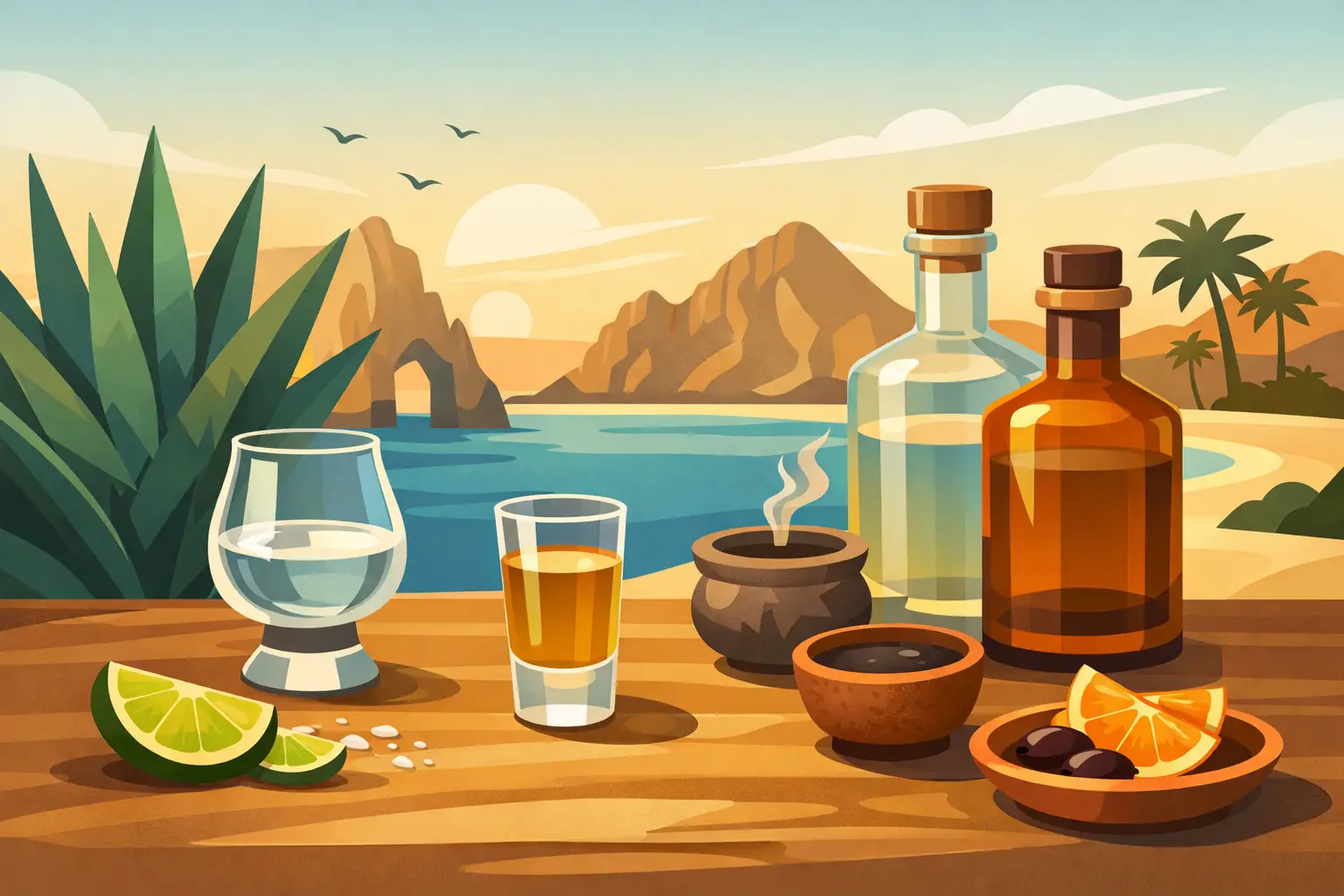
A good tequila mezcal tasting Cabo experience should begin with aroma, not a gimmick. Before the first sip, you should be able to smell cooked agave, earth, smoke, citrus oil, herbs, or even warm mineral notes rising from the glass. That first moment tells you whether you are stepping into a thoughtful tasting rooted in Mexican craft or just another tourist stop built around quick shots and loud stories.
Cabo has no shortage of places to drink. What sets a memorable tasting apart is context. Tequila and mezcal are often grouped together by travelers, but they are not interchangeable. One is not simply smooth and the other smoky. Each category carries region, raw material, production choices, and family tradition in the glass. When the experience is guided well, tasting becomes less about checking a box and more about understanding why these spirits matter.
What makes a tequila mezcal tasting in Cabo worth your time
If you are visiting Cabo and want something more elevated than a beachside cocktail round, a curated tasting offers a different kind of pleasure. It slows the pace. It gives shape to what you are drinking. And it replaces the usual vacation shorthand with something richer – a real introduction to Mexican distilling culture.
The difference starts with how the tasting is built. A serious host does not rush guests through pours. Instead, they guide you through categories, production methods, and sensory cues so your palate has a chance to notice texture, structure, and finish. You learn why one tequila shows bright roasted agave and pepper, while another feels rounder with vanilla and baking spice from barrel influence. You taste how a mezcal can express mountain herbs, wet stone, or gentle smoke depending on the agave and the oven.
That kind of experience is especially valuable in Cabo, where many visitors want something polished and memorable but still deeply local. The best tastings meet that moment beautifully. They feel celebratory, but never shallow.
Tequila and mezcal are cousins, not twins
A lot of confusion around agave spirits comes from oversimplifying them. Tequila must be made primarily in Jalisco, with a few authorized municipalities in other states, and true premium expressions are Tequila 100% Blue Agave. Mezcal can be made in several denominations of origin and from multiple agave varieties, which opens a far broader flavor spectrum.
That broader range is why mezcal often surprises people. Yes, some expressions are smoky, especially when agaves are roasted in earthen pits. But smoke is only one layer. Depending on the producer and region, you may also find tropical fruit, green olive, cacao nib, eucalyptus, white pepper, or salinity. The best guides help visitors move past the old stereotype that mezcal tastes like campfire.
Tequila deserves the same reset. Many American travelers arrive with memories of harsh pours and lime-salt rituals from college. A proper tasting quickly replaces that memory with something more refined. Blanco tequilas can be vivid and expressive, with clear agave character. Reposados add measured oak influence. Añejo and extra añejo can bring depth, but more age is not always better. It depends on whether you want to taste the barrel or the plant.
That trade-off matters. If your goal is to understand agave, a bright blanco or a minimally manipulated mezcal may teach you more than a heavily oaked spirit. If you love whiskey-like richness, aged expressions may feel more familiar and luxurious. A good tasting leaves room for both preferences without pretending there is only one right answer.
How a premium tequila mezcal tasting Cabo visitors love usually works
The strongest tastings are immersive without becoming academic. You should leave knowing more, but you should also feel hosted.
Usually, the experience begins with orientation. You are introduced to the categories, the regions, and the raw materials. That might include a look at different agaves, an explanation of cooking methods, or a conversation about crushing, fermentation, and distillation. These are not small details. They are the reason one spirit tastes floral and another tastes savory.
From there, the tasting itself should build intentionally. A clean sequence often starts with tequila before moving into mezcal and other regional distillates if available. That progression helps your palate register nuance before stronger smoke or funkier profiles arrive. In a boutique setting, the guide may also discuss lot size, producer style, and whether a bottle is widely distributed or difficult to find outside Mexico.
One of the most memorable technical details guests encounter is pearling. When a spirit is poured from a little height and tiny bubbles form and linger on the surface, those pearls can say something about texture, alcohol integration, and traditional production character. It is not a party trick. In the right hands, it becomes part of reading the spirit.
Food pairings elevate the experience even further. Chocolate, local bites, citrus, salts, and savory accompaniments can reveal hidden notes in the glass. A well-chosen pairing can soften alcohol heat, highlight minerality, or pull out fruit you did not notice at first sip. This is where tasting turns truly sensory.
Why boutique tasting rooms stand out in Cabo
Cabo offers plenty of nightlife, but boutique spirits experiences fill a different need. They are ideal for travelers who want intimacy, conversation, and quality over volume. Instead of competing with a crowd, you get a setting where questions are welcome and rare bottles are treated with respect.
That matters if you are shopping as well as tasting. In a curated retail environment, you are more likely to encounter small-batch labels, regional specialties, and categories many US visitors have never tried. Sotol, raicilla, bacanora, and pox can completely reshape how you think about Mexican spirits. Each brings its own geography, technique, and identity. For curious drinkers, that is part of the thrill.
This is where a place like Santos Destilados feels especially compelling. The boutique format, central Cabo location, and focus on guided education create an experience that is both convenient and genuinely distinctive. You can walk in with casual curiosity and leave with a much sharper palate, a better bottle, and a deeper appreciation for what Mexico produces beyond the obvious.
Who should book a tasting and who might prefer a walk-in
Not every visitor needs the same format. If you are traveling as a couple, celebrating something special, or entertaining friends who care about spirits, a private tasting often gives you the richest experience. You get more time, more tailored pours, and space to ask detailed questions. It feels personal and polished.
If your schedule is loose and you want something spontaneous, a no-reservation tasting can be perfect. It still offers guidance and quality, but with more flexibility. For many Cabo visitors, that balance is ideal – premium without feeling overplanned.
The choice depends on what kind of memory you want. Private tastings tend to feel more immersive and occasion-worthy. Walk-ins can be wonderfully relaxed and still far more meaningful than a generic bar stop.
What to look for before you choose
If you are comparing options for tequila mezcal tasting Cabo experiences, pay attention to the details that signal seriousness. Look for an emphasis on education, not just entertainment. Ask whether the tasting includes discussion of production methods, categories, and origin. Notice whether the bottle selection leans toward quality and small producers rather than familiar mass-market names.
Pairings are another good sign. So is a host who can explain why a spirit tastes the way it does, not just whether it is «smooth.» Smooth is easy. Insight is rarer.
Also consider atmosphere. Premium does not have to mean stiff. The best spaces feel warm, elegant, and relaxed, with enough energy to feel festive and enough quiet to let the spirits speak.
A final point worth remembering: the best bottle for you may not be the most expensive one on the shelf. Sometimes the most exciting discovery is a lesser-known producer with extraordinary character and a strong sense of place. A good guide helps you find that bottle, not the obvious trophy.
Cabo is at its best when it gives you more than a view. The right tasting offers flavor, craft, conversation, and a genuine encounter with Mexican tradition in one sitting. If you choose well, your favorite souvenir may not be the bottle you take home, but the palate you return with.
